Research & Experiments
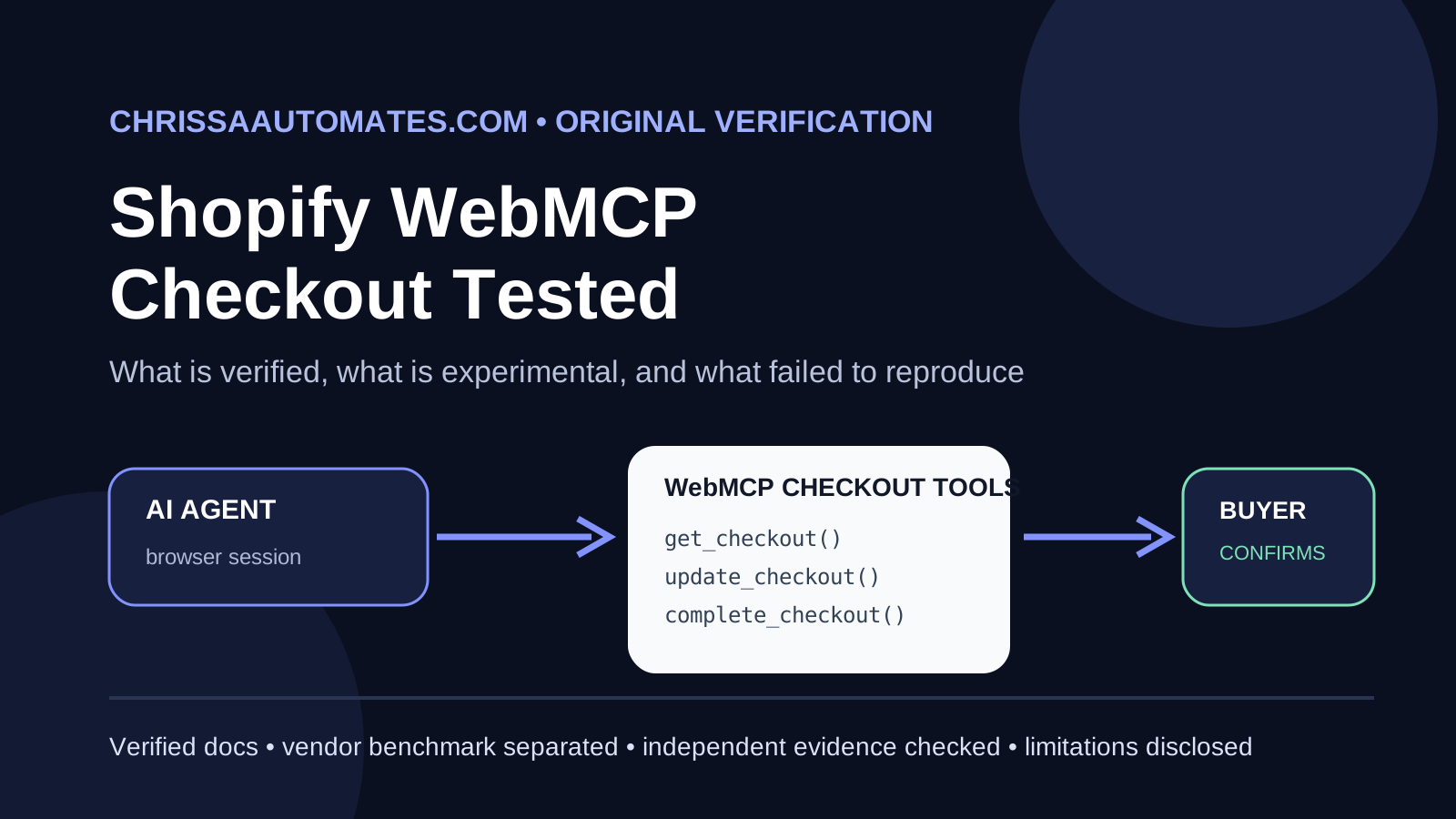
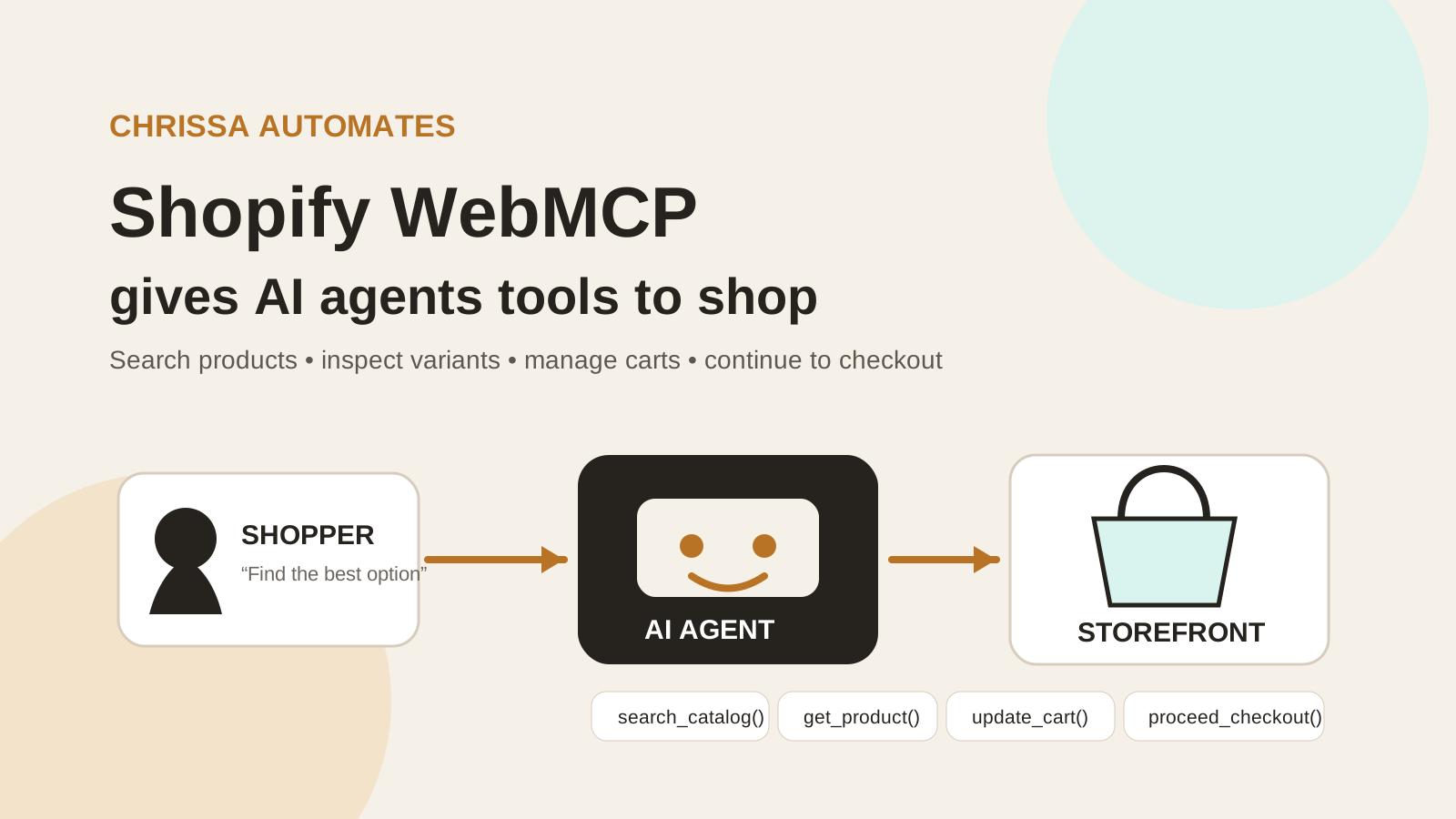
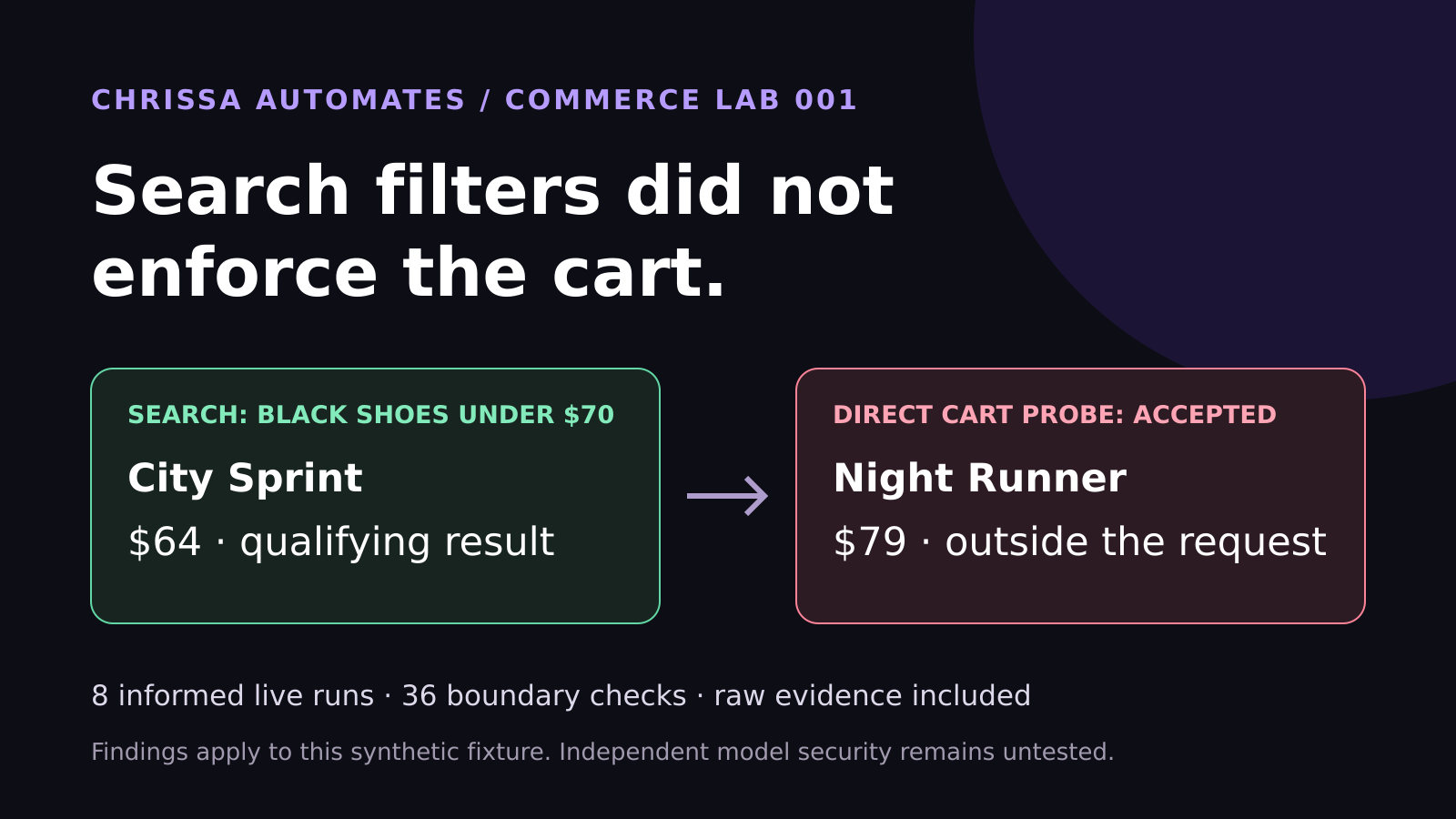
WebMCP Shopping Test: Search Filters Did Not Enforce the Cart
Eight live WebMCP runs selected the correct shoes. Another 36 checks found cart enforcement gaps. See the measured results and lessons for ecommerce brands.
AI content monetization, paid datasets, premium APIs, MCP tools, Cloudflare Pay Per Crawl, RSL
Short answer: If AI agents increasingly gain the ability to pay for digital resources, the highest-value opportunities are unlikely to be ordinary informational articles. More defensible assets include original datasets, proprietary benchmarks, frequently updated directories, specialist research, premium APIs, calculators and MCP tools that give an agent information or capabilities it cannot easily reproduce elsewhere.
The web is beginning to develop payment and licensing infrastructure for machine customers. Cloudflare has announced a Monetization Gateway designed to charge for resources including web pages, datasets, APIs and MCP tool calls. Its separate Pay Per Crawl product lets participating publishers charge verified AI crawlers for successful content retrieval, although Pay Per Crawl remains in closed beta. Really Simple Licensing, or RSL, provides machine-readable licensing terms for uses such as crawling, inference and AI training.
That does not mean every blog post is suddenly a premium AI product.
The more useful question is:
What can you build that gives an AI system a good reason to pay instead of finding a free substitute?
This guide breaks down the strongest possibilities.
Cloudflare announced its Monetization Gateway in July 2026 as infrastructure for charging callers for protected digital resources. The company specifically names web pages, datasets, APIs and MCP tools as resources that could sit behind the gateway. The initial payment mechanism uses x402, an HTTP-based payment protocol where a client can receive a 402 Payment Required response, pay, and retry the request with payment proof.
Cloudflare's Pay Per Crawl is a separate system focused on AI crawler access. Its current documentation says publishers in the closed beta can set a price for successful content retrieval. The documented minimum is $0.001 per crawl, and dynamic pricing can be used for different content.
RSL approaches the problem from the licensing side. RSL 1.0 is an open XML-based standard for expressing machine-readable usage, payment and legal terms. Its documentation includes licensing models for attribution, pay-per-crawl, pay-per-inference and other arrangements.
These systems are important because they begin giving machines a way to discover not only what a resource contains, but also the terms under which they may access or use it.
But payment infrastructure does not create value by itself.
A payment button in front of replaceable information does not make that information scarce.
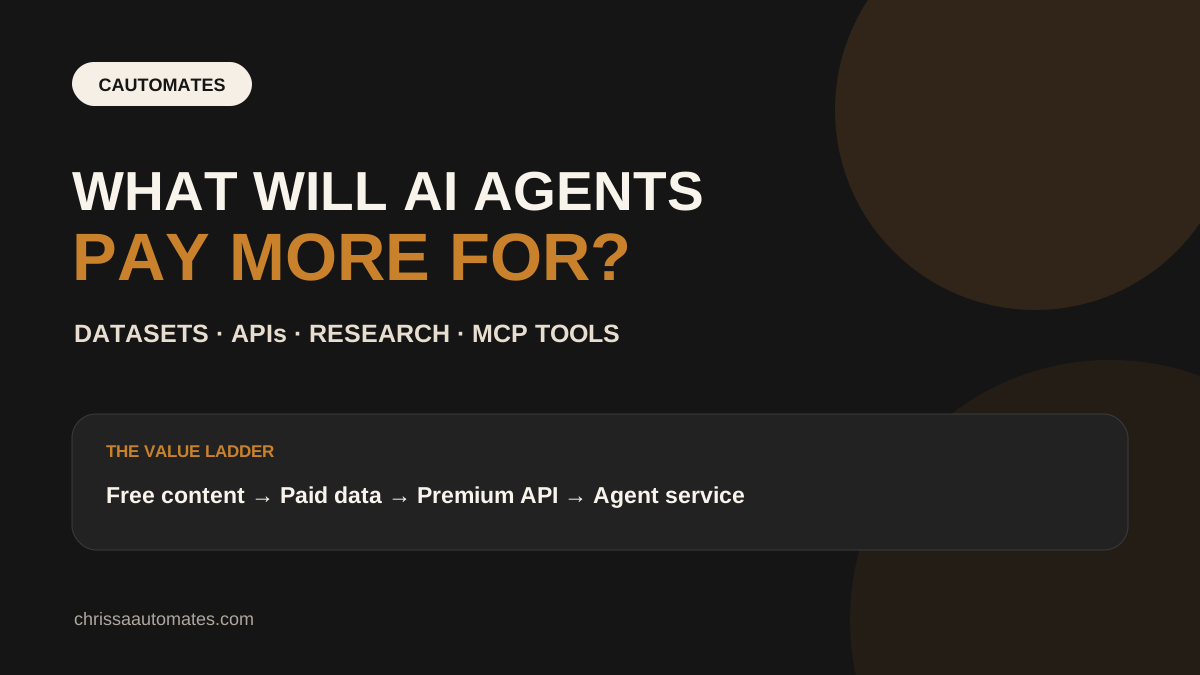
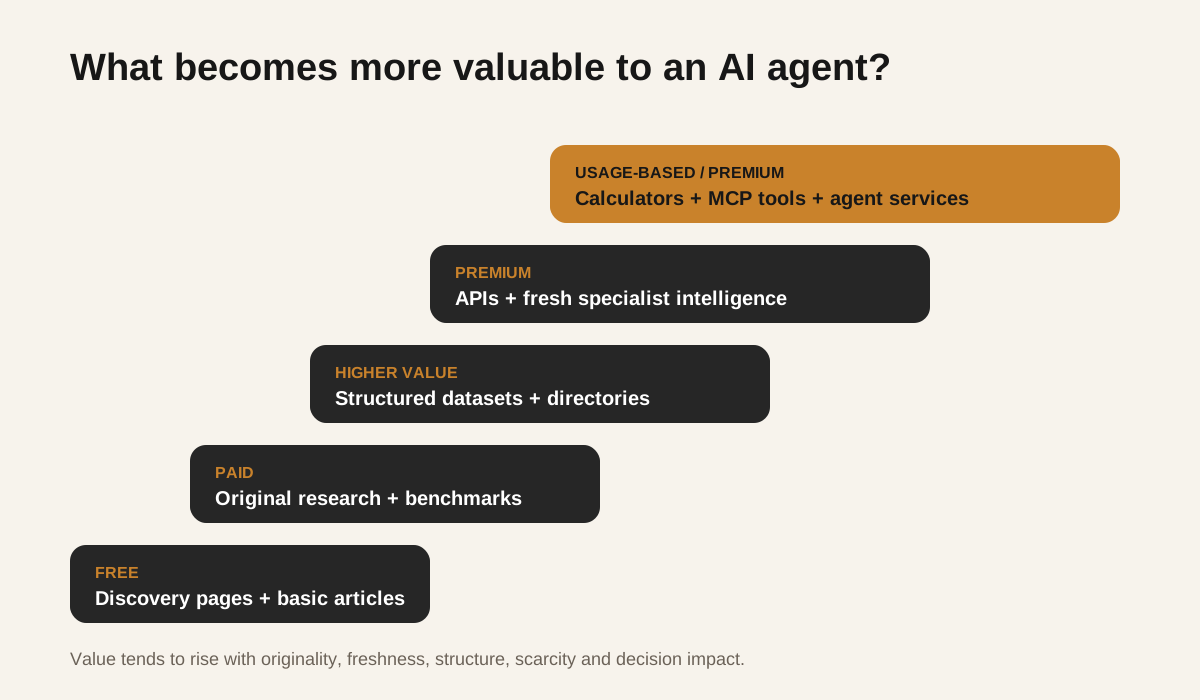
A useful way to think about this market is as a value ladder.
Your homepage, service pages, definitions, introductory articles and public summaries can remain discoverable. Their job is often distribution, trust and discovery rather than direct licensing revenue.
Research becomes more defensible when you performed the test, survey, measurement or analysis yourself.
A clean database can save an AI system significant collection, normalization and verification work.
An API can give an agent a precise, current answer at the moment it needs it.
At the highest end, the machine is no longer paying simply to read. It is paying to use a capability.
That distinction may become extremely important.
A dataset can be more valuable than the article written about it because the dataset contains the underlying evidence.
Consider a creator who studies pricing across 500 software products.
The public article might say:
Median entry-level pricing increased 14% across the category.
Useful, but limited.
The underlying dataset might contain:
That asset can answer hundreds of questions the article cannot.
Useful opportunities can exist around:
The important word is original or enriched.
Simply copying publicly available records into a CSV may not create much defensibility. Cleaning, validating, normalizing, categorizing, updating and adding proprietary measurements can.
An API becomes valuable when it saves the caller substantial work or provides information that needs to be current.
Imagine an AI purchasing agent trying to answer:
Which products meet these requirements and are available right now?
It could search dozens of pages, interpret inconsistent product descriptions and hope the information is current.
Or it could query a trusted API.
Useful premium API categories could include:
The value is not that the information arrives as JSON.
JSON is not a business model.
The value comes from the quality, freshness, scarcity and usefulness of the answer behind the endpoint.
Original benchmarks may be one of the most accessible premium assets for specialist creators and small research businesses.
You do not necessarily need millions of records.
You need a repeatable methodology and information other people have not already collected.
Examples:
The public article can reveal major findings.
The premium product can contain:
This creates a powerful publishing model:
Give away the insight. Sell deeper access to the evidence.
Directories become much more valuable when they contain information that cannot be recovered easily with a basic web search.
A directory containing only:
Company + website + description
is relatively easy to recreate.
A specialist directory containing:
Company + verified price + current availability + service area + technical compatibility + certifications + independently tested performance + last verification date
is a different asset.
Potential premium directories include:
The moat is not the directory interface. It is the difficult-to-recreate information inside it.
Freshness can create scarcity.
A language model may already know what a hotel is. It does not inherently know which rooms are available tonight at the current price.
It may know what a product is. It does not inherently know current inventory.
Information with a short useful life can therefore have higher machine value.
Examples include:
This is one reason APIs can become more valuable than static articles. The agent needs the answer now, not the answer that existed when a model was trained.
Some information is valuable precisely because gathering it requires expertise.
Think about:
A generic AI summary of an industry may be inexpensive.
A continuously updated specialist database built by people who understand the industry may not be.
The business opportunity is strongest when the research affects decisions worth significantly more than the price of accessing the research.
This category is easy to overlook.
You do not always need to sell the underlying information.
You can sell the computed answer.
Examples:
An AI agent could submit structured inputs and receive a useful result.
For example:
Calculate the expected cost of this configuration using these requirements.
The premium asset is not a page explaining the calculation. It is the system capable of performing it reliably.
This may be the most interesting long-term category.
MCP, the Model Context Protocol, gives AI applications a standardized way to interact with tools and external systems.
Instead of an AI agent paying to read your content, it could pay to use your capability.
Imagine tools such as:
check_product_compatibility
calculate_project_cost
search_proprietary_database
verify_vendor
run_compliance_check
audit_website
get_live_availability
generate_specialist_report
An agent does not necessarily care about visiting the website behind the tool. It cares about receiving a reliable result.
Cloudflare's Monetization Gateway is notable here because its announcement explicitly includes MCP tool calls alongside webpages, datasets and APIs as potentially chargeable resources.
This points toward a different kind of internet business:
Humans buy software subscriptions. Agents may increasingly buy individual capabilities.
That market is still emerging, but it is worth preparing for now.
Before building a paywall, dataset or API, score the asset against seven questions.
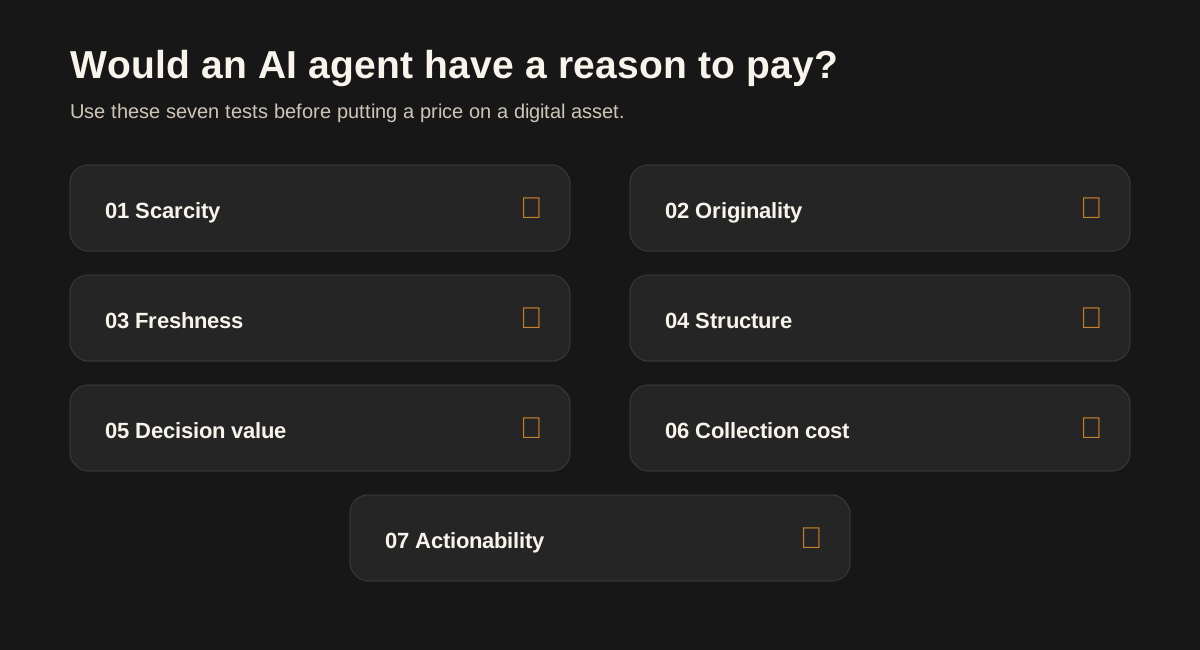
Can the agent obtain substantially the same answer elsewhere for free?
If yes, pricing power is weak.
Did you create, measure, survey, test, calculate or enrich the information yourself?
Original evidence is harder to replace than commentary about someone else's evidence.
Does the answer become less useful as it ages?
Frequently changing information creates a reason for repeated access.
Can a machine retrieve exactly what it needs without interpreting a long article?
Good structure lowers the cost of using your information.
Does the resource help make a decision involving meaningful money, time or risk?
A $10 answer can be extremely cheap if it helps make a $100,000 decision.
How expensive would it be for the buyer to recreate the asset?
If recreating your dataset takes months, purchasing access can be rational.
Can an agent do something useful with the result?
Information that directly powers a decision or workflow may be more valuable than information that merely explains a topic.
Consider two websites about CRM software.
Article: “10 Best CRM Platforms for Small Businesses”
An AI can find thousands of similar articles.
CRM intelligence database:
The second asset costs more to create, but that is precisely why it may be worth more.
Charging machines does not require hiding your entire website.
A better model can be:
Homepage: free
Educational articles: free
Research summary: free
Complete benchmark: paid
Structured dataset: higher price
Current API: premium
Specialist analysis: premium
MCP tool or computed result: usage-based
Free content performs discovery and builds authority. Premium resources solve problems that require proprietary information or capabilities.
Cloudflare's current systems already point in this direction. Pay Per Crawl supports pricing successful crawler retrievals, while the Monetization Gateway is designed for broader paid resources such as data, APIs and MCP tools.
Payment is only part of the problem. Publishers also need a way to communicate usage rights.
RSL is designed to make licensing terms machine-readable.
A publisher can describe conditions associated with uses such as AI training, search or inference. RSL documentation also describes license servers that can manage paid or free licenses, verification and protected nonpublic content.
In practical terms, the emerging stack could look like this:
Discovery: machine finds the asset
Licensing: machine reads the permitted usage and terms
Payment: machine pays when required
Access: machine receives the resource
Usage: agent uses the data, API or capability
RSL does not guarantee that an AI company will accept your price or license. It gives publishers a standardized way to express the terms.
This is one of the most important cautions.
Cloudflare allowing a publisher to set a crawler price does not prove that buyers will accept that price.
Pay Per Crawl is still closed beta. The broader agent-payment ecosystem is young. Buyer adoption, budgets, pricing norms and demand are still developing.
So do not build a business plan around the assumption that ordinary pages will suddenly generate large crawler payments.
Instead, build assets that would be valuable even if the buyer were a human company today.
If an agency, researcher, enterprise or software product would already pay for your data or capability, future AI-agent access creates an additional distribution channel.
That is a much stronger test.
Start with the information advantage you already have.
Ask:
Then build the smallest proprietary asset possible.
Do not begin with an API because APIs sound sophisticated.
Begin with valuable information.
A spreadsheet with 100 carefully verified proprietary records is more useful than an API containing information nobody wants.
The progression can be:
Collect → verify → structure → publish insights → sell deeper access → expose programmatically → automate the capability.
Suppose you run a specialist website covering commercial solar installations.
Publish guides explaining solar terminology, installation considerations and financing basics.
Survey installers and publish an annual pricing benchmark.
Maintain structured records containing region, system size, equipment, quoted cost, installation timeline and verification date.
Allow software or agents to query current regional benchmarks.
Create a calculator that accepts building size, region and requirements and returns an estimated cost range using your proprietary dataset.
Now the business is no longer monetizing words alone.
It is monetizing information infrastructure.
For most of the web's history, websites were built for humans.
Then publishers optimized for search engines.
Now another audience is emerging:
AI systems acting on behalf of humans and businesses.
Those systems may value different things.
A human might enjoy a beautifully written 2,000-word report.
An agent may prefer:
The strongest publishers may eventually serve both audiences.
Human layer: explanation, narrative, trust and discovery.
Machine layer: structure, freshness, provenance, licensing and actionability.
That is the more interesting opportunity behind AI content monetization.
Cloudflare's Pay Per Crawl allows participating site owners to set prices for successful AI crawler retrievals, but the product remains in closed beta. Availability and participating crawlers should be checked before treating it as a revenue channel.
Content becomes more defensible when it is original, scarce, current, structured, expensive to recreate and useful for making decisions or completing tasks. Proprietary datasets, benchmarks, real-time information, APIs and specialist tools fit those characteristics better than generic articles.
Not automatically. A low-quality dataset can be less valuable than excellent research. The advantage of a strong dataset is that it can answer many questions, be queried programmatically and preserve the underlying evidence behind published insights.
Technically, paid API access already exists through conventional billing systems. Emerging infrastructure such as Cloudflare's Monetization Gateway is specifically designed to make machine-to-machine payments for resources such as APIs easier.
An MCP tool is a capability that an AI application can call through the Model Context Protocol. Instead of only giving an AI information to read, a tool can let the AI perform a defined action such as searching a database, checking availability or running a calculation.
Really Simple Licensing is an open standard for expressing machine-readable licensing, usage and compensation terms for digital assets. It can describe conditions associated with AI training, crawling, inference and other uses.
Probably not as a default strategy. Free discovery content can still create visibility and demand. A stronger model is to keep useful discovery content accessible while reserving scarce research, data and capabilities for higher-value access.
Start with a problem in your niche where you can create information that is difficult to reproduce. Collect and validate the information first. Add APIs, licensing systems and agent interfaces only after the underlying asset has demonstrated value.
The biggest opportunity in AI content monetization may not be charging a fraction of a cent every time a bot reads an article.
It may be creating something valuable enough that a machine has a reason to pay more.
That could be:
a dataset it cannot recreate cheaply, an API containing current information, a benchmark based on original testing, specialist research that affects an expensive decision, or a tool that performs useful work.
The technology for machine-readable licensing and machine payments is beginning to arrive.
The harder part remains the same as it has always been:
Build something worth buying.

Chrissa Ibiernas
Chrissa Ibiernas creates practical content about AI search, agentic AI, automation and website readiness for the AI-first internet.
Building an AI or SaaS product people need to see in action?
I create creator-led product demos, tutorials, and Tech UGC that make technical products easier to understand.