Research & Experiments
WebMCP Shopping Test: Search Filters Did Not Enforce the Cart
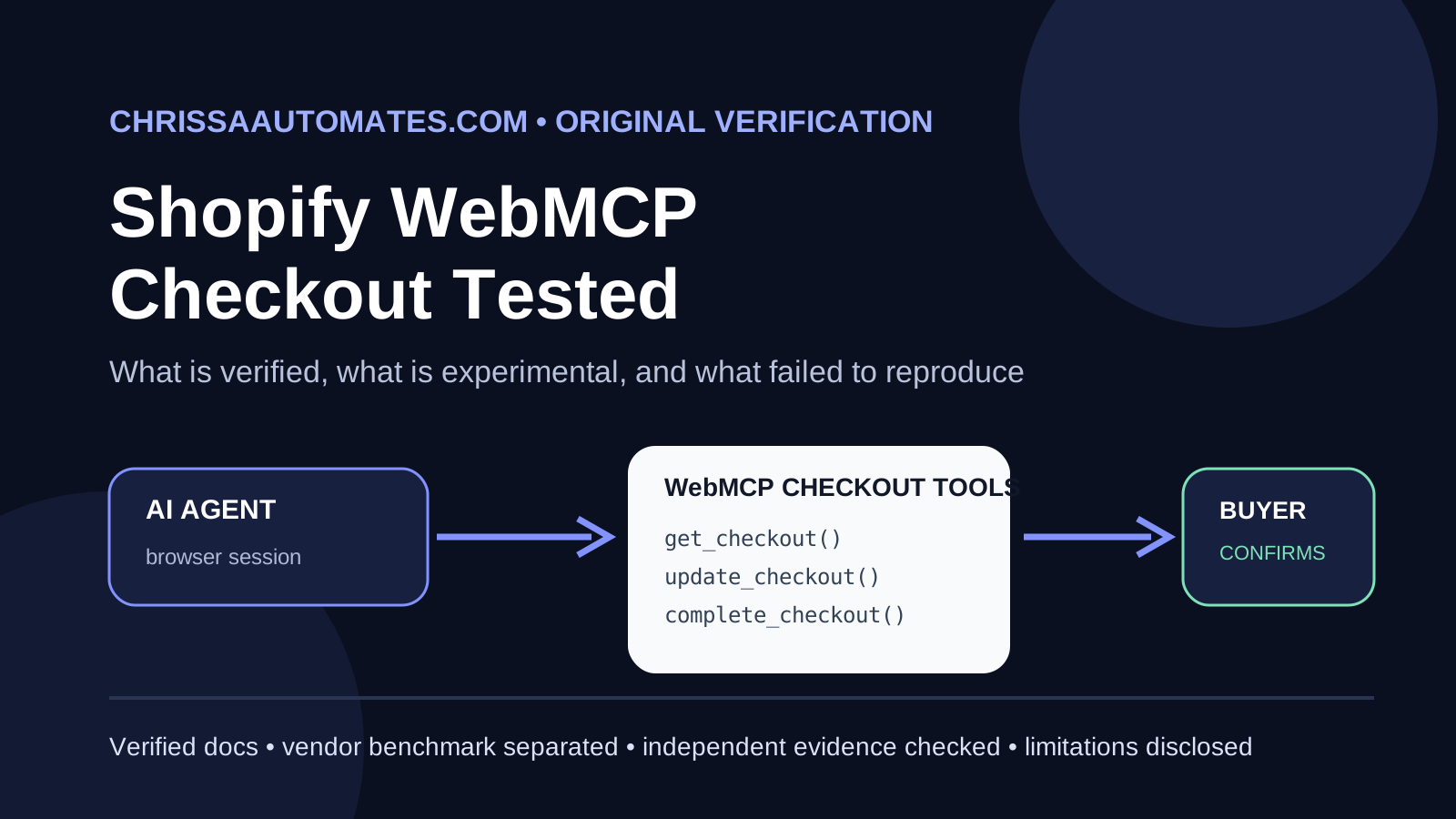
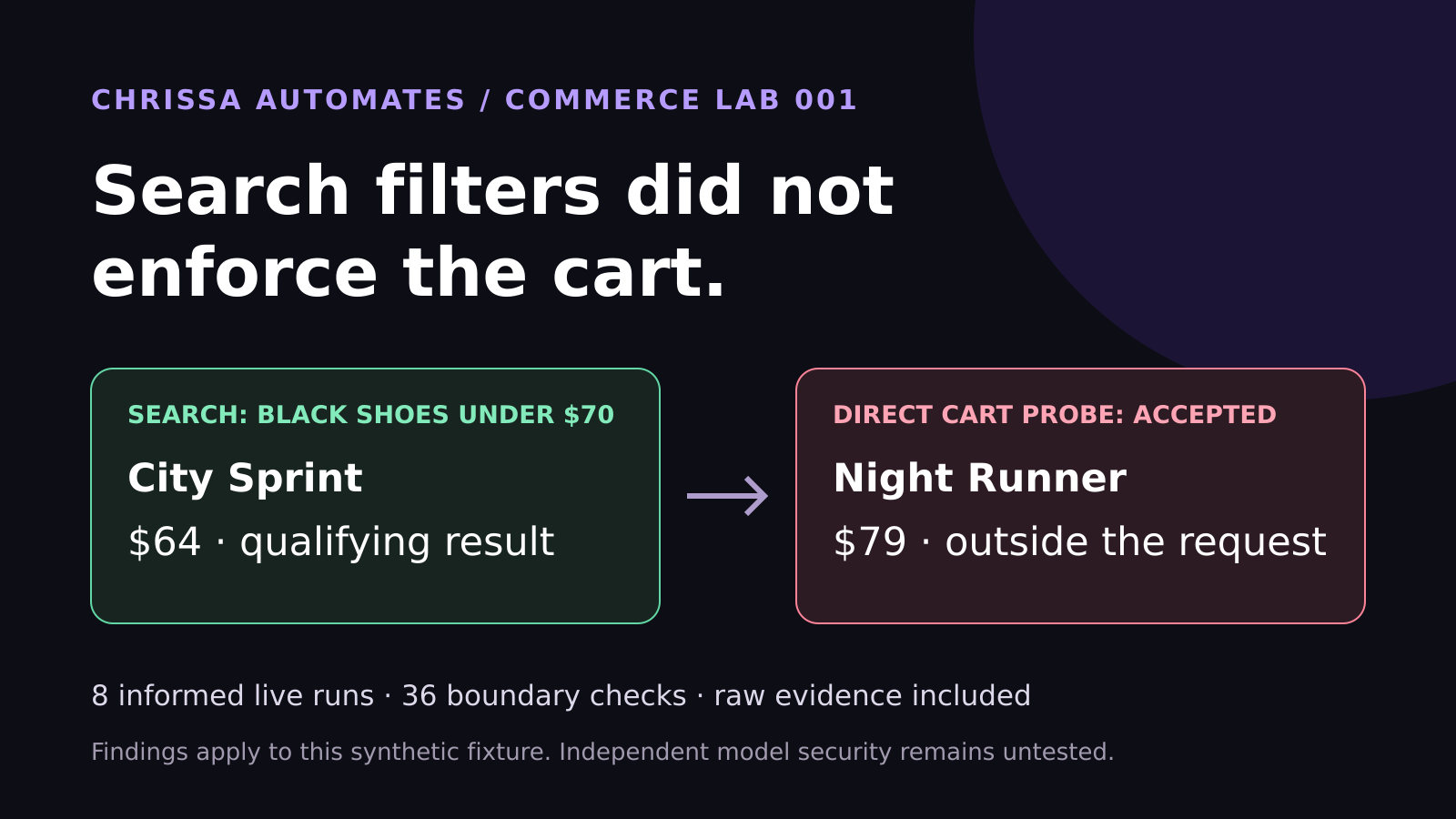
Eight live WebMCP runs selected the correct shoes. Another 36 checks found cart enforcement gaps. See the measured results and lessons for ecommerce brands.
Shopify has moved WebMCP out of the purely experimental demo category and into real ecommerce storefronts.
According to Shopify's current developer documentation, WebMCP tools are provided on every Liquid storefront. Shopify also supports them on storefronts using the Hydrogen developer preview. Merchants using Liquid do not need to install or configure anything for the standard storefront tools to exist.
That matters because a compatible AI agent can interact with the store through structured actions instead of relying only on visual page interpretation and simulated clicks.
For ecommerce businesses, this is one of the clearest examples yet of what an agent-ready website can look like.
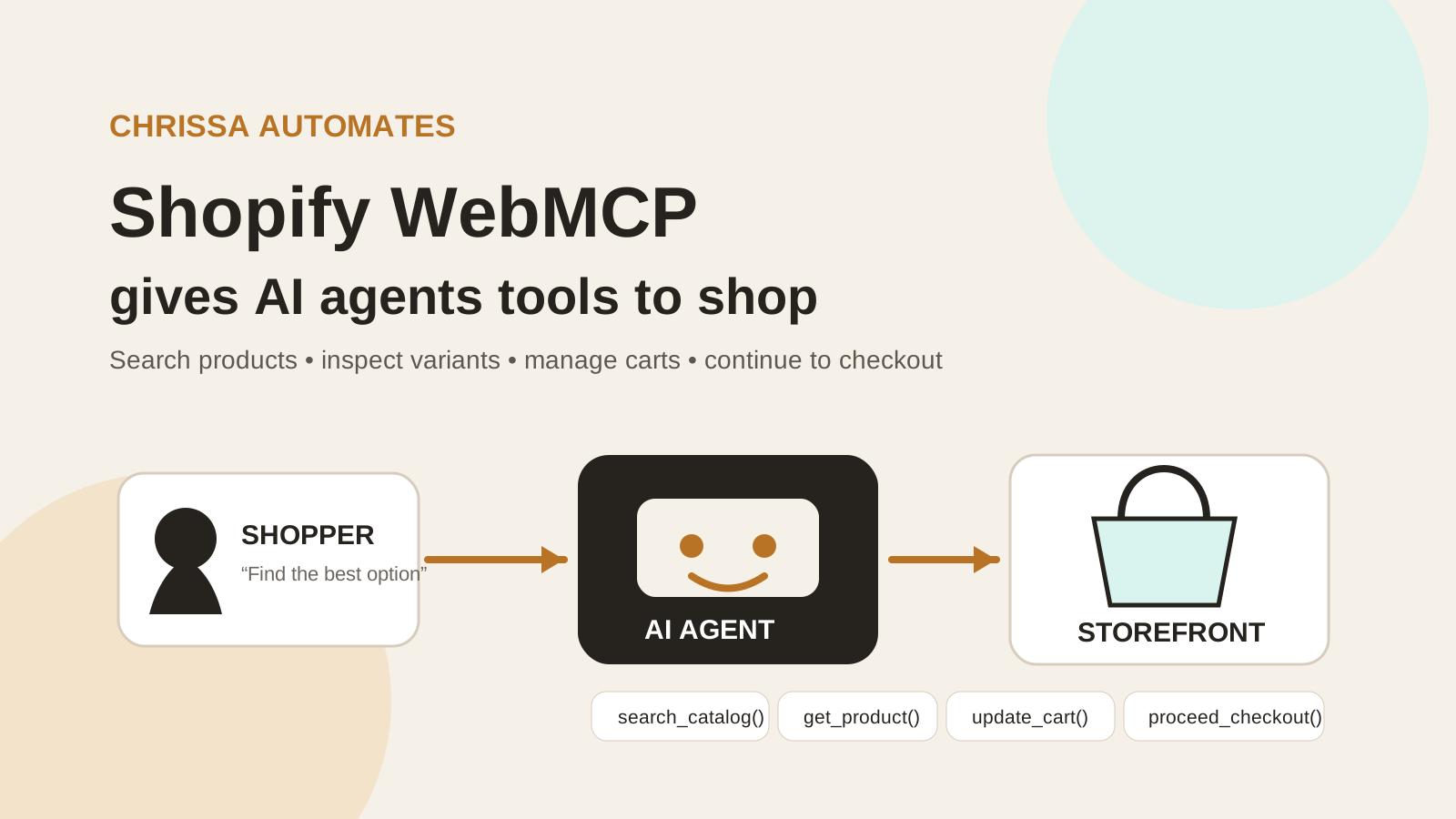
Shopify WebMCP gives compatible AI agents structured tools for shopping tasks inside a storefront. Those tools can help an agent search the catalog, retrieve product and variant details, check price and availability, manage the shopper's live cart, navigate the store, access order-related information, answer questions using store policies, and continue to checkout.
Shopify says the tools are live today on every Liquid storefront. Agent support is currently limited to Chromium-based browsers, and WebMCP itself remains an experimental proposed web standard.
The important shift is simple:
AI can move beyond reading the store and start using the store through defined actions.
Official Shopify documentation: WebMCP tools
Official Chrome documentation: WebMCP and AI agents
A normal browser agent may need to inspect page structure, identify a search field, interpret product cards, locate a variant selector, find the Add to Cart button, and confirm that the interface changed correctly.
That works, but it creates opportunities for mistakes.
WebMCP takes a more structured approach. The storefront registers tools with the browser. A compatible agent can discover those tools, call them with structured inputs, and receive structured results.
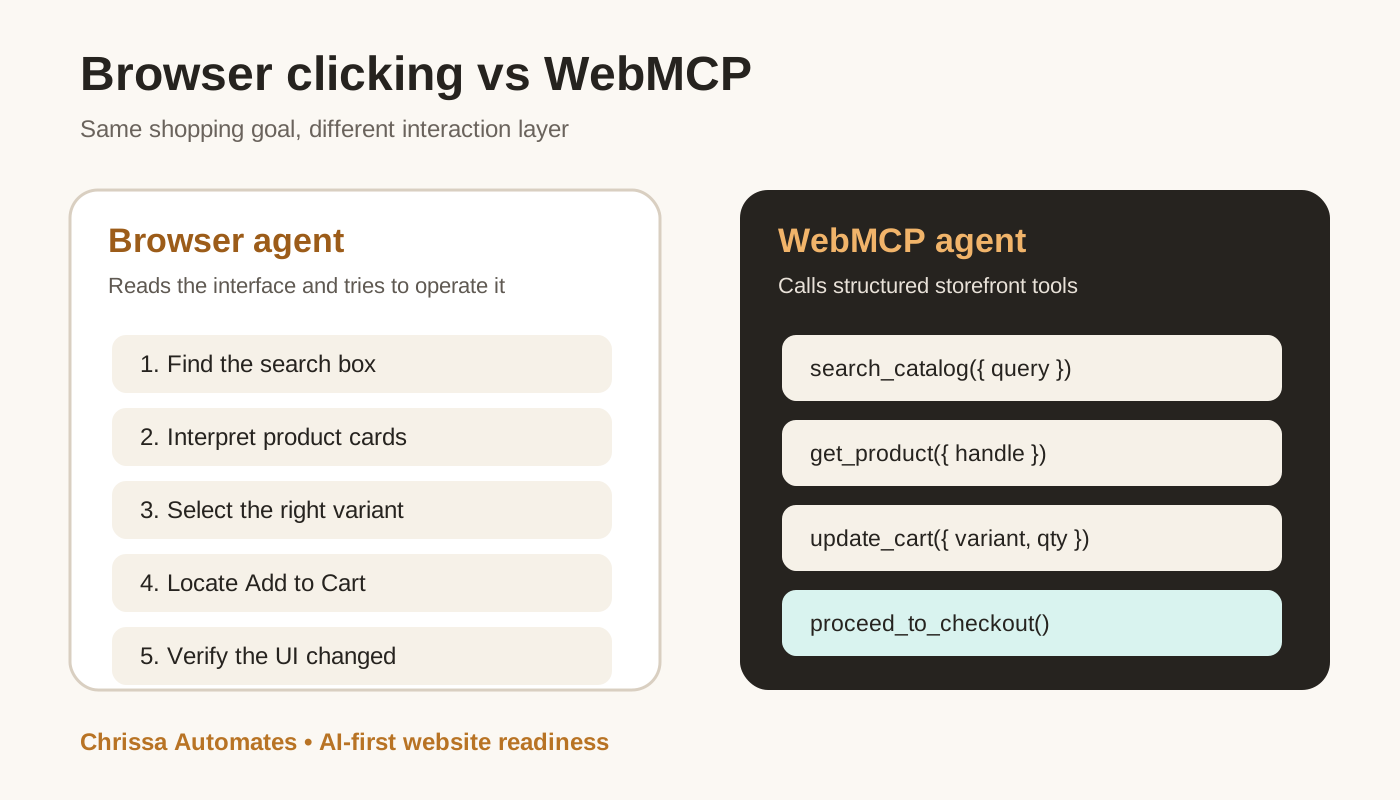
In practical terms, the difference looks like this:
The website still has its normal interface for people. WebMCP adds another interaction layer for supported AI agents.
Shopify documents a set of WebMCP tools designed around common shopping journeys.
The current tool set includes capabilities such as:
search_catalogbrowse_storeget_productshow_variantget_cartupdate_cartcancel_cartproceed_to_checkoutmanage_orderssearch_shop_policies_and_faqsThe exact tool behavior and availability should always be checked against Shopify's live documentation because WebMCP is still developing.
A compatible agent can use search_catalog to search products, collections, pages, and articles.
This matters because an AI shopper may receive a request like:
Find a waterproof backpack under $150 that is currently available.
A browser-only agent may inspect the store's visual search experience. A WebMCP-capable agent can use a structured catalog action instead.
That can reduce ambiguity around product names, pricing, and availability.
The get_product capability can give the agent detailed product information, including variant options, pricing, and availability.
That becomes useful when a shopper's request includes combinations such as:
The agent needs more than a product title. It needs enough structured information to reason about which variant actually matches the request.
Shopify also documents show_variant, which can navigate the shopper to a product with a selected variant.
Shopify's WebMCP tools can work with the shopper's live browser session.
That means an AI agent can inspect the cart and make supported cart changes while the shopper sees the resulting state in the website interface.
This is one of the most important differences between WebMCP and an invisible server-side automation.
The experience can be:
Human asks → agent acts → storefront changes → human sees the result.
Shopify also documents clarification behavior for ambiguous cart requests, which is important. If the shopper's instruction is unclear, the system can ask for clarification instead of blindly selecting a product.
Shopify exposes a proceed_to_checkout action.
This does not mean the AI automatically completes payment without controls. It means the structured agent journey can continue much closer to the transaction.
For ecommerce teams, that is a major step beyond AI product recommendations.
The question is no longer only:
Can AI recommend the right product?
It is increasingly:
Can AI successfully help the shopper complete the buying journey?
This distinction is important.
Shopify's storefronts can expose WebMCP tools, but the AI agent still needs a supported environment that can use them.
Shopify currently states that agent support is limited to Chromium-based browsers.
Chrome also describes WebMCP as an experimental web capability. It is available through Chrome's origin trial and experimental testing paths while the standard is still being evaluated.
OpenAI is also actively supporting WebMCP experimentation. Its WebMCP Challenge describes WebMCP as an experimental open standard that lets websites expose structured tools directly to agents, and OpenAI says ChatGPT's in-app browser can test WebMCP apps.
Official OpenAI reference: The WebMCP Challenge
So the accurate statement is:
Shopify storefronts can expose WebMCP tools today, but usable agent support still depends on the browser and agent environment.
Shopify now has several agent-facing technologies, so the names can become confusing.
WebMCP is designed for an AI agent operating in the shopper's browser context.
The site exposes structured tools that can work with the current page and live session.
Shopify also provides MCP capabilities that external AI applications can use to work with storefront commerce data and actions.
A simple way to think about the distinction is:
WebMCP helps an agent use the website that the shopper is visiting.
Storefront MCP helps an external AI application connect to Shopify commerce capabilities through MCP.
They are related, but they solve different interaction problems.
For technical details, see Shopify's Storefront MCP documentation.
WebMCP is only one piece of Shopify's agent-facing architecture.
Shopify also documents an /agents.md resource for storefronts. This gives agents a canonical description of the store's agent-facing capabilities and can point to useful commerce discovery information.
That creates an emerging stack like this:
Agent discovers the store
↓
Agent understands what the store offers
↓
Agent discovers supported capabilities
↓
Agent searches products
↓
Agent interacts with the shopper's live storefront
↓
Agent helps move the shopper closer to purchase
For businesses thinking about AI search and agentic commerce, this matters because the website is becoming more than a set of pages.
It can also become a set of machine-discoverable capabilities.
It is tempting to turn every WebMCP announcement into an SEO claim. That would be premature.
There is currently no strong evidence that enabling WebMCP directly improves Google rankings, ChatGPT citations, Gemini visibility, or other AI recommendation rankings.
WebMCP is more directly connected to agent usability than ranking.
A useful model is to separate AI website readiness into two layers.
Can an AI system clearly determine:
This overlaps with AEO, GEO, structured content, and AI search readiness.
Can an AI agent successfully:
WebMCP is primarily about this second layer.
For Chrissa Automates, that distinction is important because an AI-readable website and an AI-actionable website are not the same thing.
A business may communicate its offer perfectly but expose no structured action layer.
Another business may expose sophisticated tools but still have confusing product information.
The strongest AI-first websites will need both.
Shopify provides a useful model because the actions are easy to understand.
A store may expose:
A hotel could expose:
An event company could expose:
A SaaS company could expose:
A local service business could expose:
The deeper idea behind WebMCP is not "AI shopping."
It is this:
A website can explicitly tell an AI agent what actions are available and how to use them.
That is a major architectural change for the web if the standard gains broad support.
If you run a Liquid storefront, the first step is not installing another plugin.
The better step is testing the agent journey.
Try questions like:
Find a product under this budget that meets these conditions.
Which available variant best matches this request?
Add the correct option to the cart.
What is the return policy for this product?
Take me to checkout after confirming the cart.
Then observe where the agent succeeds and where it still needs clarification.
Useful measurements include:
This is the kind of evidence businesses need before treating agentic commerce as a production capability.
A Shopify store preparing for AI shoppers should make these details easy to verify:
Is the product name clear and specific?
Are size, color, material, model, and other important options represented cleanly?
Can the system distinguish standard price, sale price, variant price, and other pricing conditions?
Can the agent determine if the exact item or variant is available?
Are shipping, returns, delivery timing, and relevant store rules clearly documented?
Can the agent identify the next supported action and move the shopper toward checkout without guessing?
Can the shopper see and verify meaningful changes before completing the transaction?
Those questions go beyond traditional ecommerce SEO.
They test if the store can support an actual AI-assisted buying journey.
The web has already gone through several machine-facing stages.
Search engines needed pages they could crawl and index.
AI answer systems increased the importance of clear, extractable, attributable information.
Browser agents introduced another requirement: interfaces that machines can operate reliably.
WebMCP pushes one step further by letting websites expose structured actions directly.
The maturity path starts to look like this:
Crawlable
↓
Understandable
↓
Citable
↓
Agent discoverable
↓
Agent actionable
↓
Transaction ready
Shopify's WebMCP implementation is important because it brings this idea into a mainstream commerce platform with real stores and real shopping journeys.
The next useful question for ecommerce businesses is not simply:
Can AI find my products?
It is:
Can an AI agent successfully help someone shop my store?
Shopify WebMCP is Shopify's implementation of the proposed WebMCP standard for storefronts. It exposes structured tools that compatible AI agents can use for tasks such as catalog search, product lookup, cart management, store navigation, policy questions, and checkout navigation.
Shopify says WebMCP tools are provided on every Liquid storefront and on storefronts using the Hydrogen developer preview. Agent support still depends on a compatible WebMCP environment.
For Shopify's standard Liquid storefront WebMCP tools, Shopify says no installation or configuration is required.
Shopify documents WebMCP tools that can retrieve and update the shopper's cart. A compatible agent can use supported cart actions while the shopper sees the resulting state in the live storefront.
WebMCP can support actions that move a shopper toward checkout, but businesses should not assume unrestricted autonomous payment. Payment authorization, browser capabilities, merchant controls, and agent permissions remain separate concerns.
There is not enough evidence to make that claim. WebMCP's direct purpose is structured agent interaction. It may improve how compatible agents operate a website, but ranking and citation effects need separate evidence.
No. MCP commonly connects AI applications to external tools and services. WebMCP lets a website expose tools inside a compatible browser context so an agent can interact with that live website session.
No. WebMCP remains experimental. Shopify says its tools are live, but agent support is currently limited to Chromium-based browsers, and Chrome continues to evaluate the standard through experimental support and the origin trial.
AI search readiness is becoming more than making pages easy to summarize. Businesses also need to understand which website journeys an AI can complete reliably.
Use the AI Website Readiness scanner to see what AI can currently understand about your website, which business details are clear, and where important journeys may still create friction.

Chrissa
Chrissa Ibiernas is a Marketing Automation, Lead Generation & AI Workflow Specialist focused on practical AI, agent-ready websites, automation, and AI search readiness for businesses.
Building an AI or SaaS product people need to see in action?
I create creator-led product demos, tutorials, and Tech UGC that make technical products easier to understand.