Research & Experiments
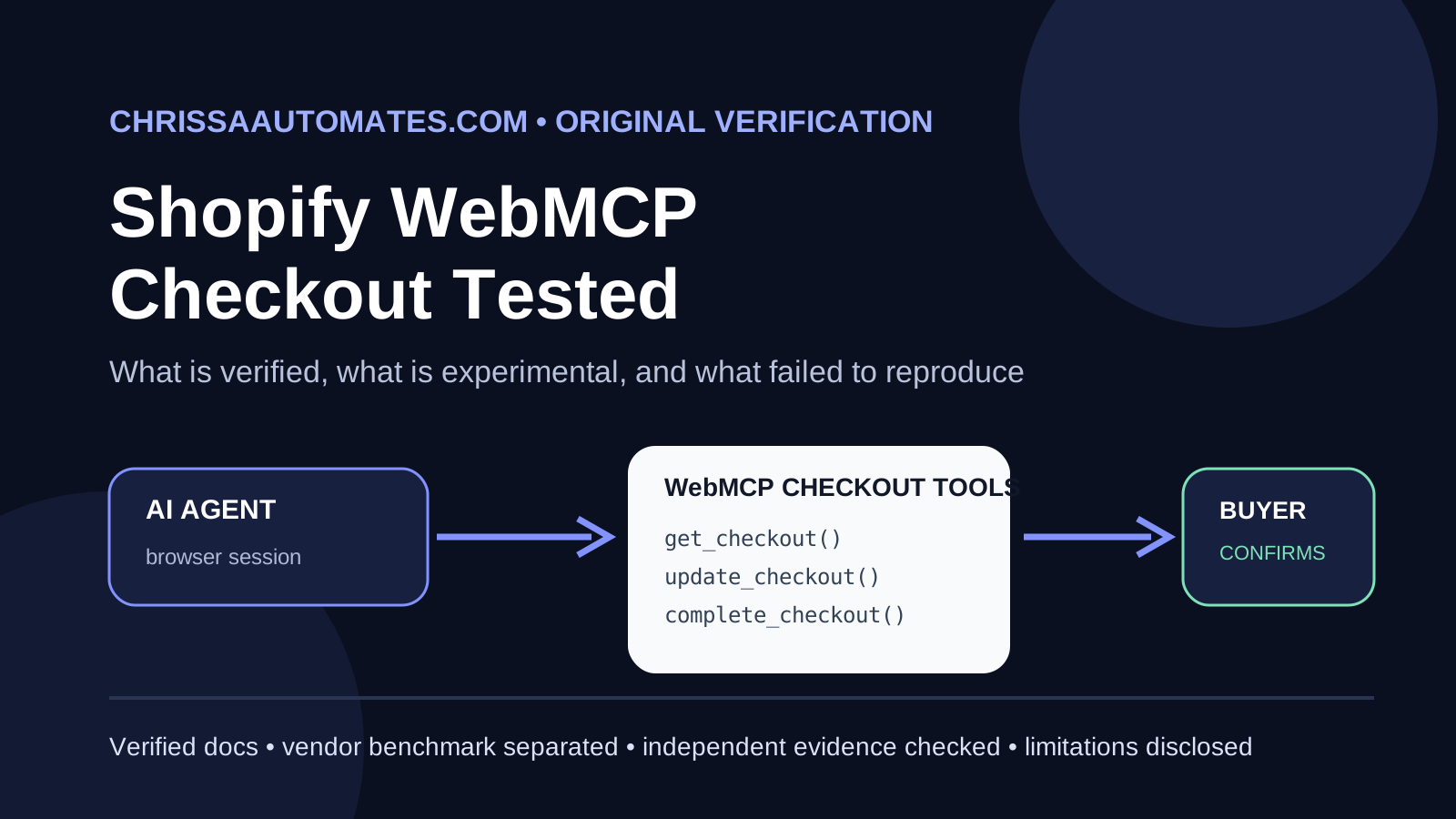
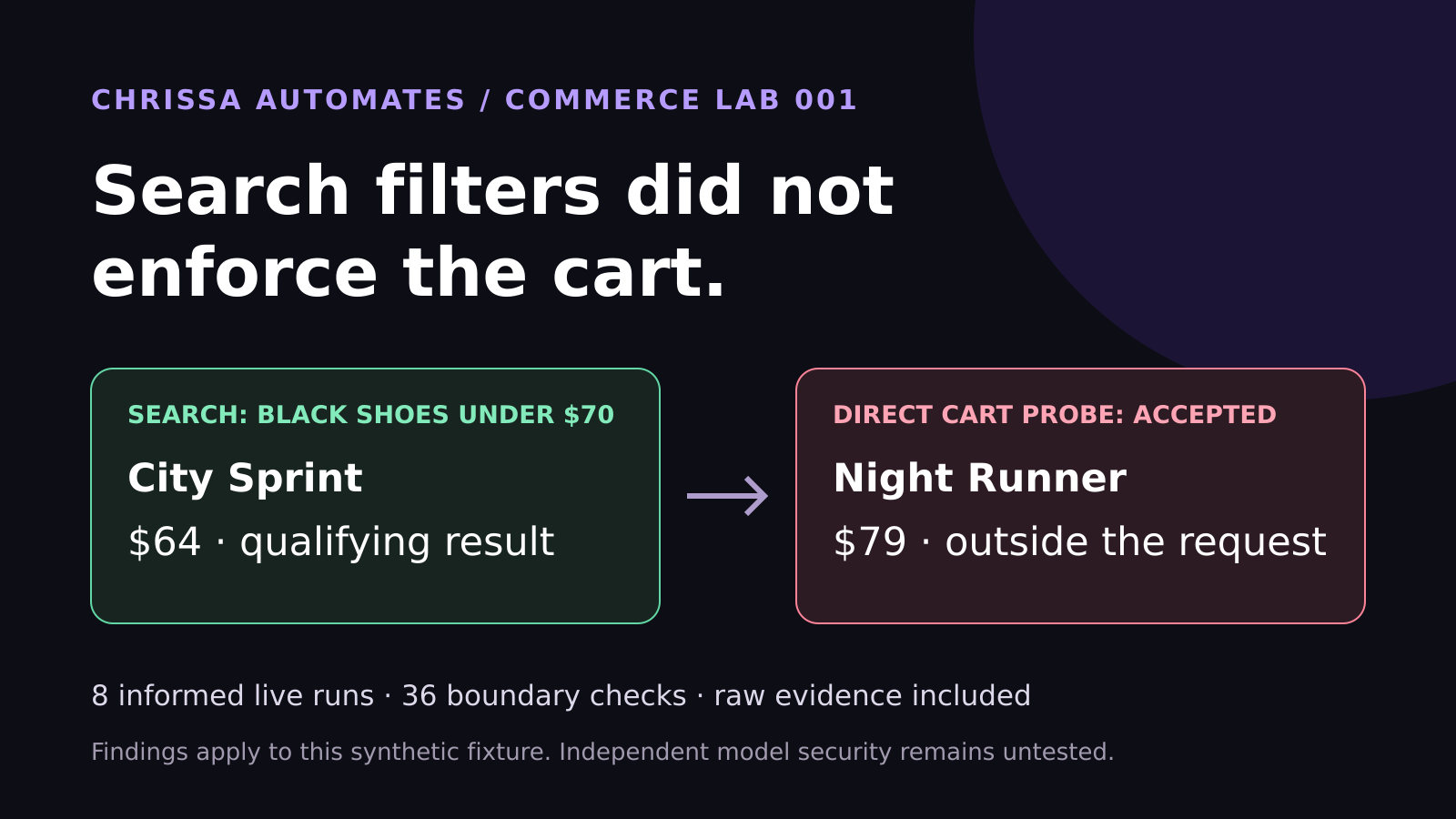
WebMCP Shopping Test: Search Filters Did Not Enforce the Cart
Eight live WebMCP runs selected the correct shoes. Another 36 checks found cart enforcement gaps. See the measured results and lessons for ecommerce brands.
ChatGPT Work for marketing, AI marketing workflows, marketing automation, AI delegation
Short answer: ChatGPT Work can take on longer, multi-step marketing jobs when you give it the business context, source files, rules and a clear finished deliverable. Instead of asking it for isolated answers, marketers can delegate workflows such as campaign analysis, competitor research, campaign briefs, content repurposing, funnel analysis and recurring marketing reports.
The important shift is this:
Do not ask ChatGPT to help with one tiny step if the real job contains six connected steps. Give it the job.
OpenAI describes ChatGPT Work as an agent for longer, multi-step work that can research and analyze information, work across connected apps and files, and create finished materials such as documents, spreadsheets, presentations, reports and Sites. OpenAI also gives a marketing example: turning customer research into a campaign brief, then using that brief to create marketing assets and adapt them for different markets.
That makes Work more interesting for marketers than another writing assistant. The opportunity is to delegate a workflow, keep context across the steps, and review a finished marketing deliverable.
Regular ChatGPT is excellent when the job is conversational:
“Give me five campaign ideas.”
“Rewrite this headline.”
“Explain this metric.”
ChatGPT Work is intended for jobs closer to:
“Use these campaign files, CRM notes and last month's report. Analyze performance, identify the biggest changes, separate confirmed findings from hypotheses, and create this week's review using our existing template.”
OpenAI's current product guidance distinguishes Chat as the fast conversational experience and Work as the experience for research, analysis and finished multi-step deliverables.
This matters because most marketing jobs are not one prompt long.
A campaign review might require you to collect data, compare periods, inspect changes, read campaign notes, identify anomalies, form hypotheses, rank priorities and create a report. If you ask AI about each step separately, you are still the workflow engine.
Delegation means giving the agent enough context to carry the job across those steps.
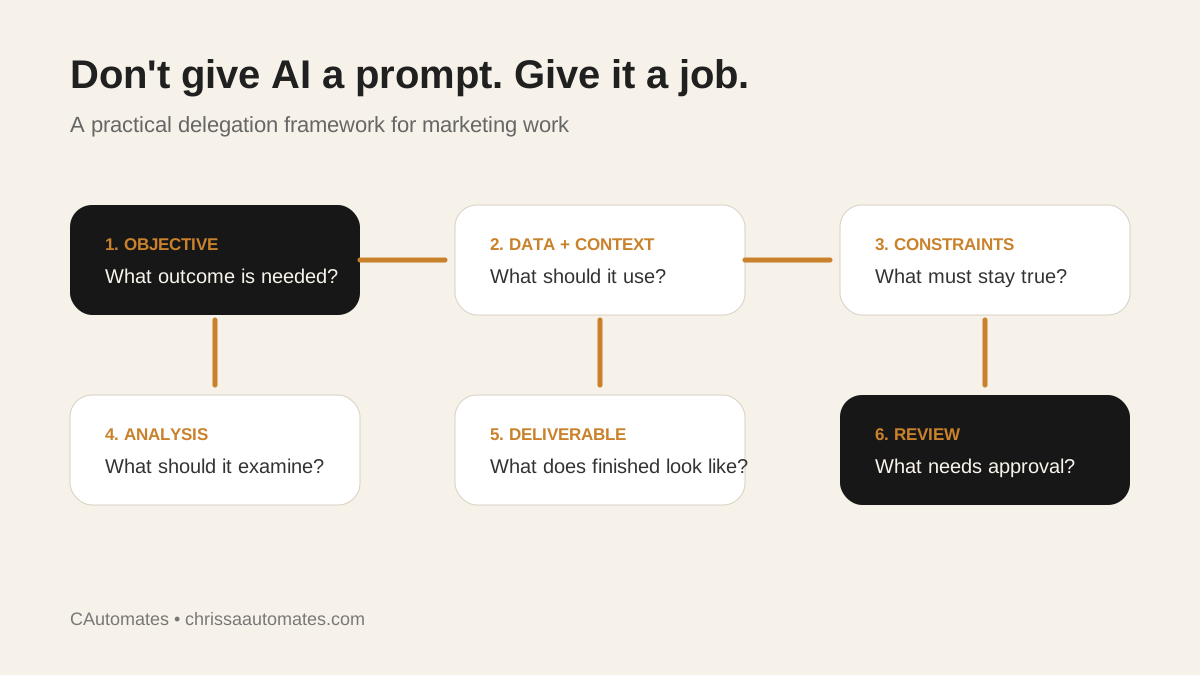
A useful marketing task for ChatGPT Work has six parts:
What business outcome are you trying to produce?
Bad: “Analyze my marketing.”
Better: “Find the three biggest changes in paid campaign performance this week and identify what the marketing team should investigate before Monday's review.”
Tell Work which files, apps, reports, templates, previous deliverables and business information matter.
This could include campaign exports, GA4 data, CRM lead statuses, customer research, creative briefs, meeting notes, brand guidelines and previous reports.
OpenAI recommends giving Work the real materials your team already uses rather than starting every job with an empty prompt.
Define the rules that should stay true.
Examples:
Tell it what needs to be examined, compared or reconciled.
Describe what finished looks like.
Do you want a campaign brief, spreadsheet, executive report, content package or presentation?
State which decisions require a human.
This is especially important for budgets, publishing, client communication, pricing and changes that are difficult to reverse.
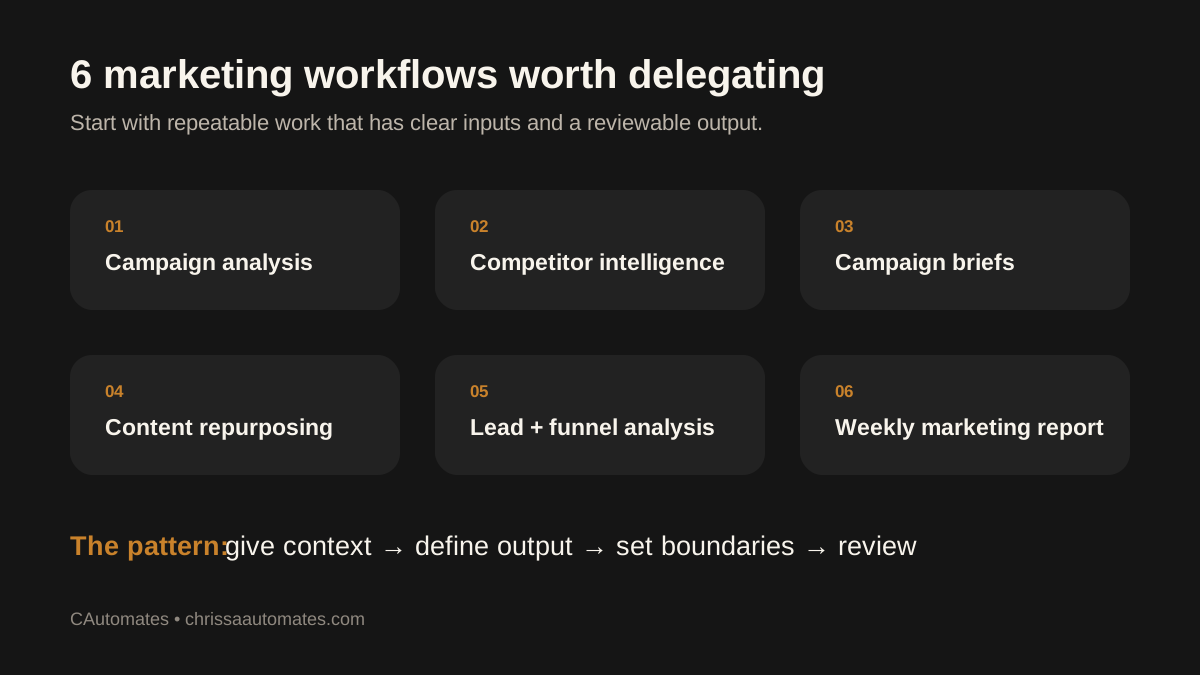
The strongest starting points are jobs with repeatable inputs, a recognizable process and an output you can inspect before using it.
Instead of asking:
“How did my Google Ads do?”
Delegate the analysis package.
Give Work the campaign export, analytics report, CRM outcomes, campaign notes and previous review if available.
Then define the job:
Review the attached paid campaign data, analytics data and CRM outcomes. Compare the latest 14-day period with the previous 14 days. Identify the three biggest meaningful changes. For each change, show the supporting metric, explain possible causes, and label the explanation as confirmed, likely or needs investigation. Flag tracking problems separately. Finish with five investigation or action items ranked by expected impact and confidence. Do not recommend a budget change without showing the evidence behind it.
The important part is not the wording of the prompt. It is that the agent receives the whole analysis assignment.
Competitor research is often fragmented across browser tabs, screenshots, spreadsheets and notes.
A better delegated job is:
Research the five named competitors using current public information. Compare positioning, target audience, core offer, pricing information if publicly stated, proof points, lead-generation approach, major content themes and recent launches. Cite the source for every factual claim. Create a comparison table, then write a one-page strategic brief showing gaps we could investigate. Do not assume a missing feature means the competitor does not offer it. Mark unavailable information as not found.
This gives the marketer a reviewable research artifact instead of a loose collection of AI observations.
This is one of the most natural Work use cases because campaign briefs pull information from many places.
Provide customer research, campaign goals, previous performance, brand guidelines, offer details, audience information and known constraints.
Then delegate:
Build a campaign brief for the attached launch. Use the customer research as the primary source for audience problems and language. Include the business objective, audience, problem, offer, messaging hierarchy, proof points, objections, channels, creative directions, KPIs, testing plan and claims requiring verification. Keep confirmed customer evidence separate from strategic recommendations. Use the attached previous brief as the structural template, but do not copy its campaign-specific content.
OpenAI specifically recommends reference files and reusable templates when Work needs to create recurring deliverables in an existing format.
This is a good first workflow because you already understand what a correct report should look like.
If this is recurring work, keep the marketing instructions, reference files and related chats together in a Project. Work can use project context when started inside that Project.
A useful package could include:
Do not upload data simply because you have it. Include information that helps answer the business question.
For example:
Compare August 1–14 with July 18–31. Focus on qualified leads and cost per qualified lead rather than raw form submissions.
This prevents the agent from choosing a comparison that does not match the business review.
Add:
Every numerical conclusion must be traceable to the provided data. Separate observed facts from possible explanations. If the available data cannot explain a change, say that more investigation is required.
For example:
Create a two-page marketing performance brief with: executive summary, KPI table, biggest changes, likely causes, tracking concerns, decisions needed and five priorities for next week. Match the attached report's structure.
A polished AI report can still contain a weak conclusion.
Check the biggest claims against the underlying data before the report is shared or used for campaign decisions.
This workflow is useful for campaign planning, SEO, positioning and sales enablement.
Do not ask Work to “research competitors.”
Ask something decision-oriented:
We are preparing a campaign for [offer]. I need to understand how competitors position similar offers and where our message could be differentiated.
Specify the companies and the comparison fields.
Useful fields include audience, offer, promise, pricing, proof, CTA, lead magnet, content themes and visible campaign messaging.
Tell Work to cite public sources for factual claims and distinguish not found from does not exist.
That one rule can materially improve competitor research quality.
First, a factual comparison table.
Second, a strategic interpretation.
Keeping those separate makes it easier to see where the AI moves from evidence into recommendation.
The goal is not to imitate competitors.
Ask:
Based on the comparison, identify underserved questions, weakly supported claims, messaging similarities and potential differentiation angles we should investigate.
Content repurposing becomes much more useful when the agent works from one authoritative source instead of generating disconnected posts.
Use a webinar, research report, interview, podcast transcript, YouTube video, campaign report or finished article.
Provide the audience, voice guidelines, product positioning, claims policy and examples of strong previous content.
For example:
Treat the attached webinar transcript as the source of truth. Create a seven-day content package: one LinkedIn post, one newsletter, two 30-second video scripts, one carousel outline, three short social posts and one blog outline. Each asset should use a different angle rather than repeating the same summary. Do not add statistics or product claims that are not supported by the source material. Create a content calendar showing the angle, audience problem, format and CTA for each asset.
For technical, regulated or high-stakes content, ask the agent to flag claims that need verification before publishing.
Do not review each post in isolation.
Check if the seven-day package has enough variety, moves the audience through different questions and supports the same strategic objective.
A marketing team can also delegate the preparation of a funnel diagnosis.
Provide landing-page performance, campaign source data, CRM stages and sales outcomes where available.
Then ask Work to map the journey:
traffic → lead → qualified lead → opportunity → sale
A useful assignment is:
Analyze the funnel by source. Identify the stages with the largest drop-offs, sources producing high lead volume but weak qualification, and sources producing fewer but stronger opportunities. Flag missing attribution or inconsistent stage definitions before drawing conclusions. Create a funnel table and a prioritized list of measurement or conversion experiments.
The quality of this analysis depends heavily on tracking quality. An AI agent cannot recover business outcomes that were never recorded.
This is where delegation becomes especially valuable because the same work repeats.
A weekly report might combine:
OpenAI says Work can use Scheduled Tasks for work that runs once, repeats on a schedule or monitors for changes, subject to available access and permissions.
A recurring assignment could be:
Prepare the weekly marketing intelligence report using the approved template. Focus on meaningful changes, not a list of every metric. Include what changed, why it matters, what is confirmed, what needs investigation, decisions required and next week's priorities. Do not interpret missing data as poor performance.
Run it manually first. Once the output is consistently useful, consider making the workflow recurring.
After a campaign brief is approved, Work can help turn it into first versions of the materials required for execution.
OpenAI says Work can create and edit documents, spreadsheets, presentations, reports and other supported deliverables from instructions, source material or templates. It can also work with native Google Docs, Sheets and Slides where the relevant Google Workspace app is enabled.
That means an approved brief can become the context for:
The important word is approved. Do not let the asset-generation stage silently change the strategy that the team already agreed on.
A marketer using AI badly can spend all day prompting.
Prompt 1: Analyze this spreadsheet.
Prompt 2: Now compare last month.
Prompt 3: Now summarize it.
Prompt 4: Put that into a report.
Prompt 5: Rewrite it for leadership.
At that point, the marketer is still coordinating every step.
A delegated assignment describes the full destination:
Use the attached campaign data, CRM outcomes and previous report. Compare the agreed periods, investigate the biggest changes, separate evidence from hypotheses, identify tracking concerns, and produce the leadership report using the existing template. Stop and ask before making any campaign change.
That is the practical difference between using AI as a chat assistant and using an agent as a worker inside a defined process.
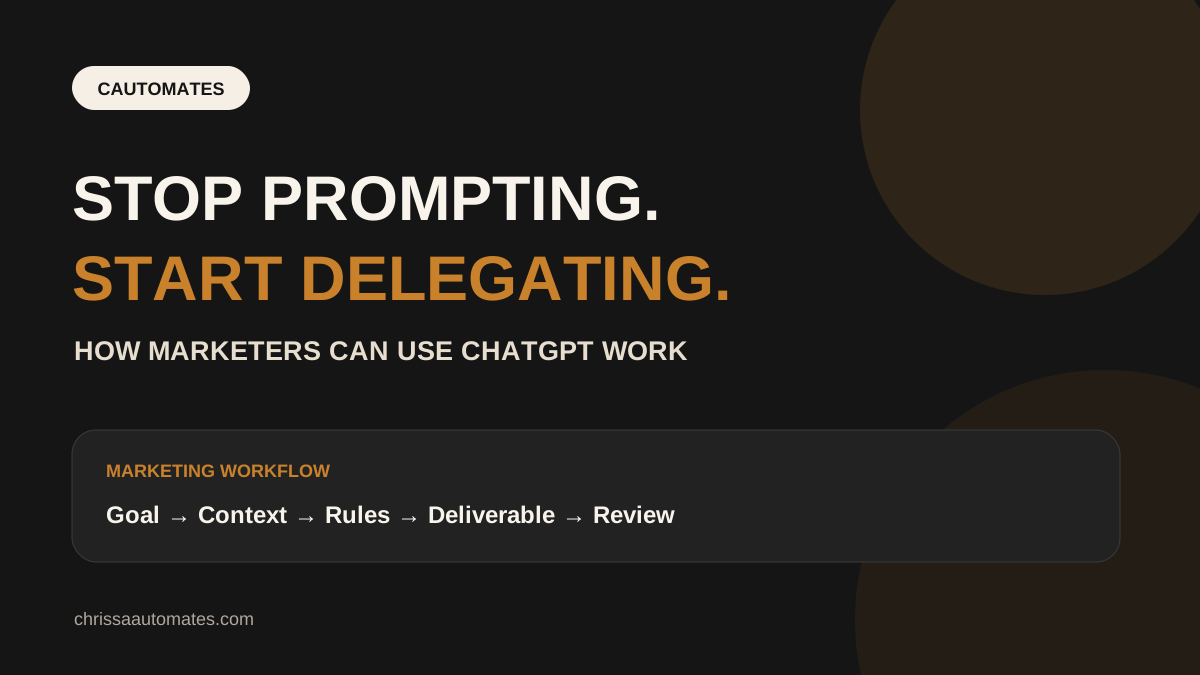
Use this structure instead of starting with “help me with marketing.”
Objective: What business outcome should this job produce?
Source material: Which files, apps, reports, templates or research should be used?
Business context: What does the agent need to understand about the customer, offer, campaign or goal?
Analysis required: What should be compared, checked, calculated or investigated?
Rules: What must stay unchanged? What claims require evidence? How should missing information be handled?
Deliverable: What exact artifact should be created and what sections should it contain?
Approval boundary: What must not be sent, published, changed or approved without me?
Completion criteria: What must be true before the job is considered finished?
The framework is intentionally boring. Good delegation usually is.
The sophistication comes from the context, data and decision rules you provide.
Use a Project when the work repeatedly needs the same instructions, files and context. Start the Work chat inside the relevant Project so the job can use that context.
OpenAI recommends grounding Work in the files and materials teams already use. For marketers, that might mean the campaign brief, research, spreadsheet, reporting template and meeting notes.
If the weekly report already has an approved format, attach it and tell Work what should remain unchanged.
For spreadsheets, specify sheets, columns, formulas and charts that matter. For presentations, specify sections, slide types and visual requirements.
Work can operate across connected apps and files when those tools and permissions are available. Give access based on the job, not because connecting everything sounds convenient.
Examples:
Once a workflow has been tested, Work can support scheduled or recurring jobs where available. A good candidate is something such as a Monday campaign brief or Friday marketing intelligence report.
Do not schedule a workflow you have not reviewed manually first.
Some tasks can be prepared by AI but should still have a clear decision owner.
Be careful with:
The question is not “Can AI touch this?”
A better question is:
“Which part can the agent prepare, and which decision still belongs to the marketer?”
Use this quick test.
A task is a strong candidate when:
If you cannot explain the job clearly to a new human teammate, it may also be difficult to delegate reliably to an AI agent.
Yes. OpenAI describes Work as an agent for longer, multi-step tasks that can research, analyze information, work across connected apps and files, and create finished deliverables. OpenAI specifically uses campaign briefs and marketing assets as examples of Work workflows.
Good starting points include campaign analysis, competitor intelligence, campaign briefs, content repurposing, funnel analysis and recurring marketing reports because each can be defined with source material, rules and a reviewable output.
Yes, subject to plan, workspace, file and app availability. OpenAI says Work can create and edit documents, spreadsheets, presentations and reports. Supported Google Workspace connections can also allow native Google Docs, Sheets and Slides work.
Yes. Work can use files and Project context. On supported desktop setups it can also work with local files and apps when you grant the required permission.
OpenAI says Work can use Scheduled Tasks for one-time, recurring, trigger-based or monitoring work where supported. Test the workflow manually before relying on a recurring run.
Start with analysis and preparation. For material budget, targeting, publishing or client-facing changes, define an approval boundary and verify the recommendation before an action is taken.
Chat is designed for quick conversational help. Work is designed for longer, multi-step jobs and finished deliverables. For a marketer, that means moving from asking for individual ideas or rewrites toward delegating a defined workflow with source material, constraints and an expected output.
Prompt engineering taught people how to ask AI better questions.
Agentic work requires another skill: job design.
A marketing leader needs to define the objective, give the right context, establish the rules, describe the output and decide which actions require approval.
That is much closer to managing a capable junior teammate than operating a text generator.
Start with one workflow you already know well.
Give ChatGPT Work the real files.
Define what finished means.
Review what it does.
Then improve the delegation instructions until the workflow becomes repeatable.
The goal is not to spend the entire day talking to AI.
The goal is to hand off a well-defined piece of marketing work and get something useful back.

Chrissa Ibiernas
Chrissa Ibiernas creates practical content about AI search, agentic AI, automation and website readiness for the AI-first internet.
Building an AI or SaaS product people need to see in action?
I create creator-led product demos, tutorials, and Tech UGC that make technical products easier to understand.