Research & Experiments
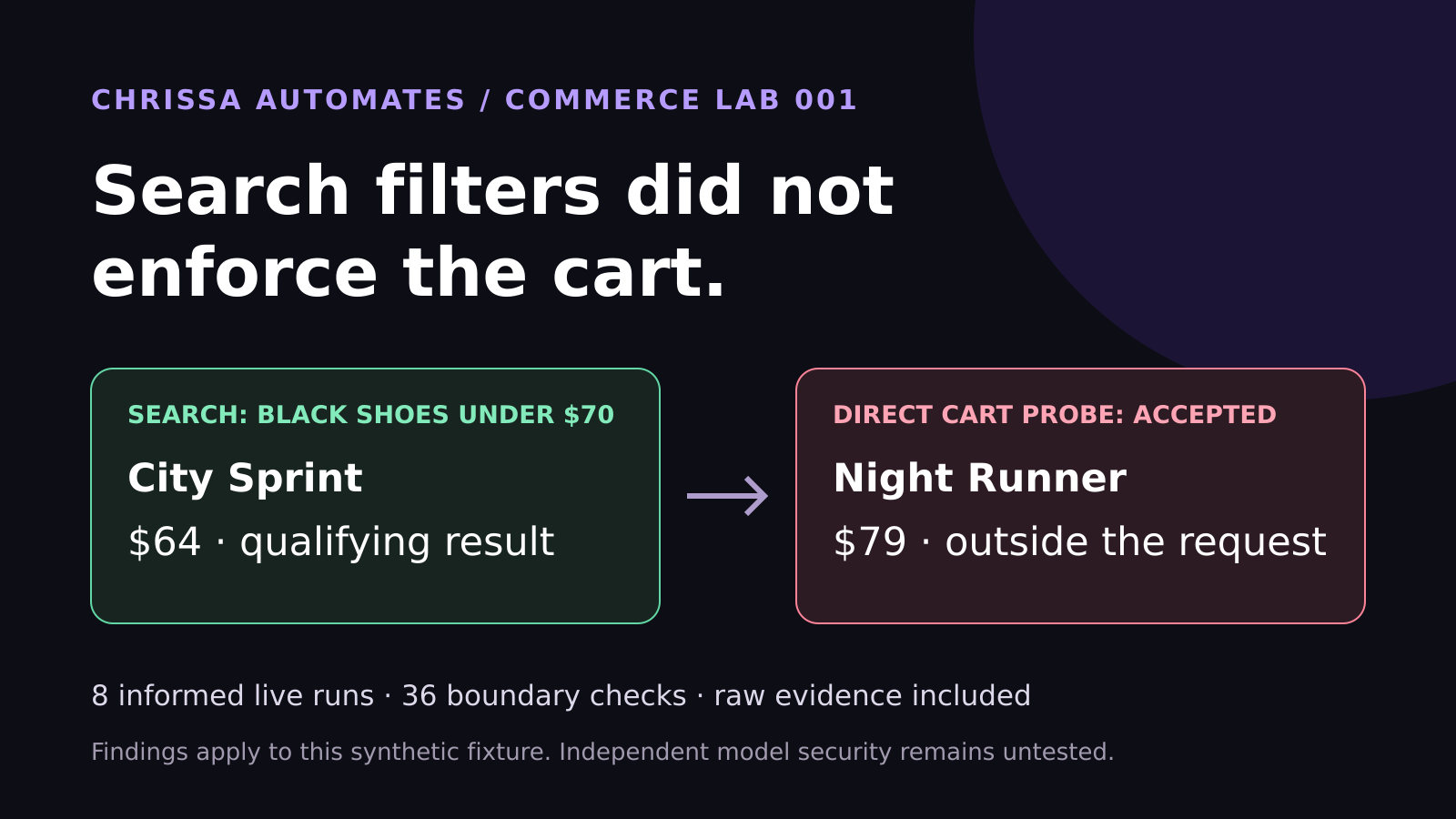
WebMCP Shopping Test: Search Filters Did Not Enforce the Cart
Eight live WebMCP runs selected the correct shoes. Another 36 checks found cart enforcement gaps. See the measured results and lessons for ecommerce brands.
Google Ads Ask Advisor, Google Ads AI, Gemini, AI campaign analysis
Short answer: Google is bringing more conversational AI into Google Ads and Google Analytics so marketers can ask questions about campaign performance in normal language. Ask Advisor is designed to help investigate performance, surface insights and support reporting without requiring users to manually dig through every dashboard first.
For a business owner, the idea is simple: instead of starting with rows of advertising metrics, you can start with a question such as “What changed in my campaign?” or “What should I investigate?”
This does not mean businesses should hand control of their advertising budget to AI. It means campaign analysis is becoming more conversational and agent-like.
Availability note: Google's new advisor capabilities are rolling out in beta and availability can depend on account, language and product access. Check your own Google Ads or Analytics account before assuming the feature is available.
Ask Advisor is an AI-assisted experience inside Google's advertising ecosystem that uses Gemini to help marketers understand their advertising data and investigate campaign questions.
Instead of navigating through several reports to assemble an explanation, a marketer can begin with a natural-language question. The system can use account context to help surface relevant information.
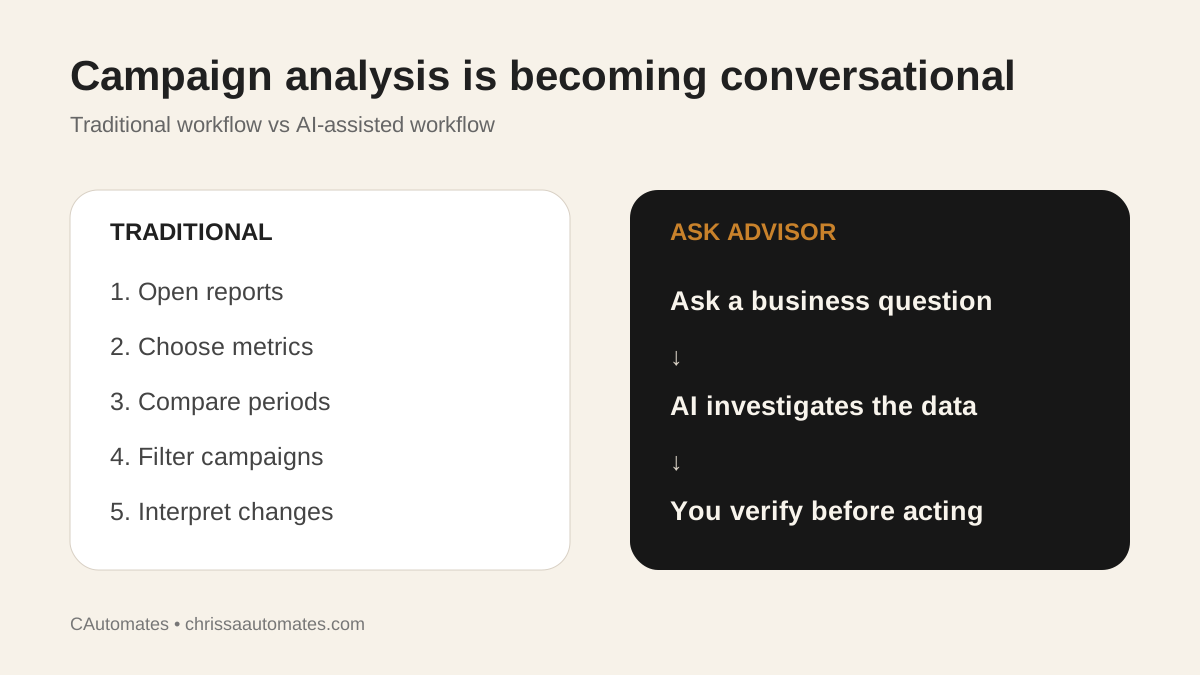
That changes the starting point for campaign analysis:
Traditional workflow: open reports → choose metrics → compare dates → filter campaigns → interpret changes.
AI-assisted workflow: ask a business question → inspect the AI's explanation → verify the underlying data → decide what action makes sense.
The final two steps still matter. AI can shorten the investigation, but the advertiser remains responsible for business decisions and campaign changes.
The most useful questions are not technical prompts. They are the same questions a business owner might ask a marketing specialist.
Examples include:
The exact answer and available actions depend on the account data and the version of the feature available to the user.
Google Ads contains a large amount of information. That is useful for specialists, but it can be overwhelming for a business owner who mainly wants to know three things:
What happened? Why did it happen? What should I look at next?
Conversational analysis can reduce some of that friction. A local service company should not need to memorize every advertising metric before it can investigate a weak campaign.
Ask Advisor points toward a future where the interface translates a business question into the reporting work required to investigate it.
It is useful to think of Ask Advisor as part of the shift toward agentic marketing software.
A normal chatbot gives a general answer based mainly on the conversation and information available to the model. An agentic product can work with tools, context or business data to help complete a task.
In this case, the important difference is access to advertising context. The value is not simply that Gemini can explain what click-through rate means. A generic chatbot can already explain that. The more valuable use case is helping analyze the advertiser's actual campaign information inside the product where that information lives.
Ask Advisor should not be treated as a replacement for business judgment.
An AI system can identify patterns in campaign data, summarize changes and make analysis easier to access. It may not understand every business constraint behind those numbers.
For example, a campaign could appear weaker because a service was intentionally paused, lead quality matters more than lead volume, inventory changed, seasonality affected demand, a landing page changed, or offline conversions are missing.
Campaign data can describe what happened inside the measured system. Business context helps explain what those numbers actually mean.
The better workflow is therefore:
AI investigates → human verifies → business context is added → decision is made.
If Ask Advisor appears in your account, start with questions that produce information you can verify.
This is a good first test because you can compare the answer against campaign history and known changes.
Do not automatically accept the recommendation. Use it to see which metric or campaign the system considers most important.
Look for the evidence behind the explanation. Check traffic, conversion rate, spend, campaign changes and tracking quality.
This can test how well the system identifies meaningful movement across an account.
Conversational reporting may become one of the most practical uses of AI inside analytics products because it reduces the work required to translate a business question into a report.
Before changing a campaign, verify the date range, campaign, conversion tracking, attribution settings, recent website changes, budget changes, search-term quality, lead quality outside Google Ads, and offline sales or bookings that may not appear in the platform.
This matters because an advertising dashboard only sees the information connected to it.
AI analysis is only as useful as the business data available to analyze.
If a company tracks clicks but not qualified leads, the system cannot reliably know which clicks created good prospects. If a booking happens in a separate platform and the conversion is not connected correctly, the campaign may look less valuable than it actually is.
As advertising tools become more agentic, clean measurement becomes even more important.
The useful chain is:
Ad → landing page → lead or booking → qualified opportunity → sale.
The more of that journey a business can measure accurately, the more useful AI-assisted analysis can become.
Not automatically.
The repetitive parts of campaign analysis are becoming easier to automate. But marketing work also includes decisions about positioning, customer intent, landing pages, creative strategy, offer quality, lead quality, budget priorities and business economics.
A useful specialist may increasingly spend less time operating dashboards and more time interpreting what the AI finds.
Agencies should pay attention because clients may soon be able to ask their advertising platform many questions they previously asked an account manager.
Reporting alone becomes less differentiated when software can generate explanations conversationally.
Higher-value agency work includes validating AI findings, connecting advertising data with CRM outcomes, improving conversion tracking, diagnosing landing-page problems, understanding lead quality, designing experiments and translating campaign data into business decisions.
Ask Advisor is part of a broader change in business software.
People are moving from navigating software manually toward telling software what they want to accomplish.
Instead of find the report → configure the report → interpret the report, we increasingly get ask the question → agent investigates → review the evidence.
The same pattern is appearing in coding, research, customer support, productivity software and browser agents.
For businesses, learning how to supervise these systems may become more important than memorizing every interface they operate.
Ask Advisor is an AI-assisted experience that uses Gemini to help users investigate advertising performance and work with campaign information through natural-language questions.
Do not assume that Ask Advisor should autonomously manage your advertising budget. Available capabilities can vary, and businesses should review campaign data and understand a recommendation before making material changes.
Availability is still rolling out and can depend on account, language and beta access. Check inside your own Google Ads or Analytics product for current availability.
Start with a question you can verify, such as “What changed recently?” Then compare its explanation with the underlying campaign data and your known business changes.
AI can automate more reporting and analysis work, but campaign decisions still require context about customers, offers, lead quality, tracking and business goals.
You do not need to rebuild your advertising strategy because Google added an AI advisor.
The goal is not to let AI run advertising without oversight. The goal is to see if AI can reduce the time required to understand what is happening.
Google Ads becoming more conversational is another sign that software interfaces are changing.
Businesses used to learn where every button and report lived. Increasingly, they will ask an AI agent for an outcome and supervise the work it performs.
For Google Ads, that might begin with a simple question:
“What is the biggest problem with my campaign right now?”
The interesting part is no longer that AI can answer the question. It is that the AI can increasingly answer it using the business's own advertising context.
That is what makes this shift worth watching.

Chrissa Ibiernas
Chrissa Ibiernas creates practical content about AI search, agentic AI, automation and website readiness for the AI-first internet.
Building an AI or SaaS product people need to see in action?
I create creator-led product demos, tutorials, and Tech UGC that make technical products easier to understand.