Research & Experiments
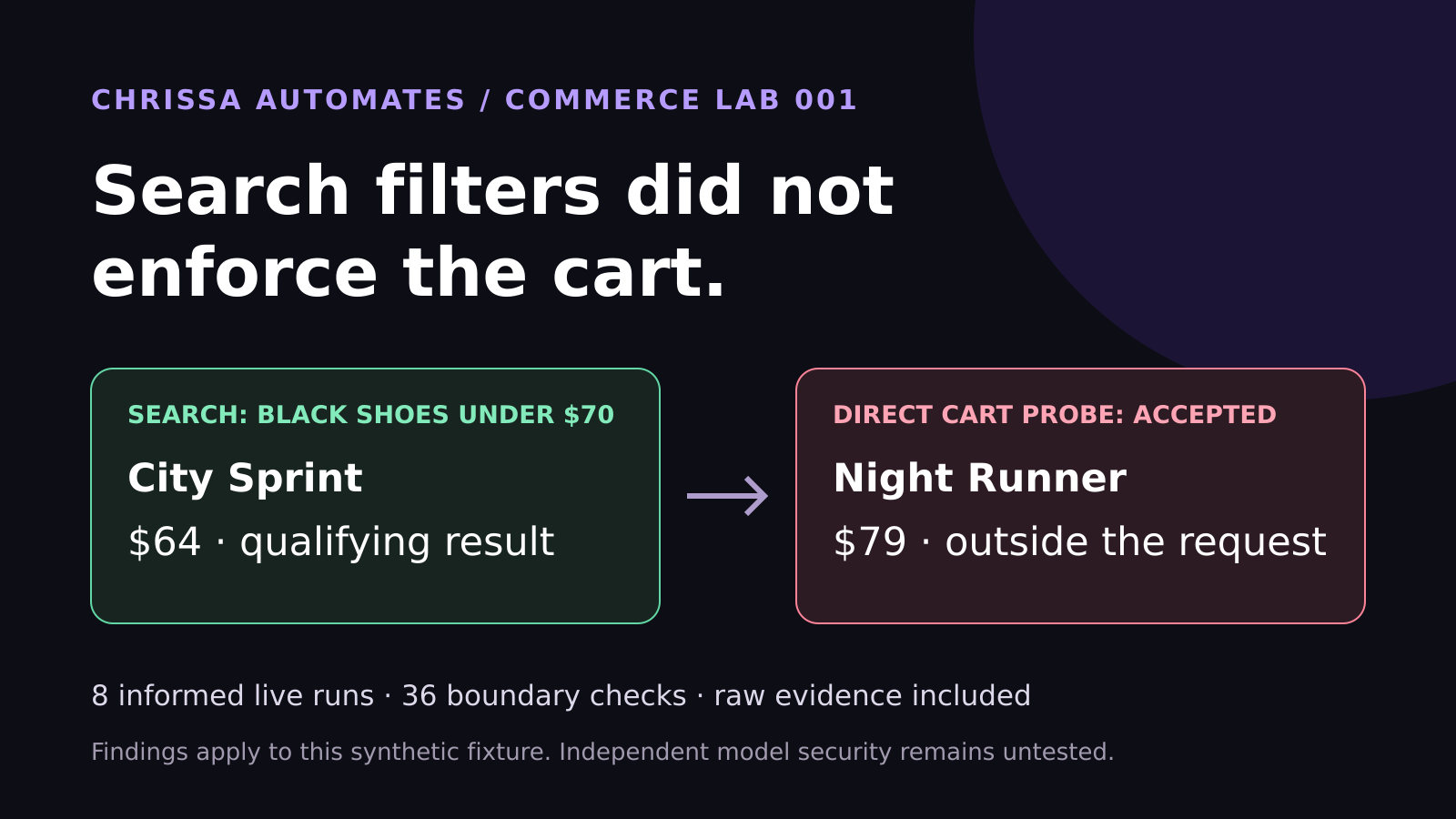
WebMCP Shopping Test: Search Filters Did Not Enforce the Cart
Eight live WebMCP runs selected the correct shoes. Another 36 checks found cart enforcement gaps. See the measured results and lessons for ecommerce brands.
ChatGPT Ads, AEO, SEO, AI Search Advertising
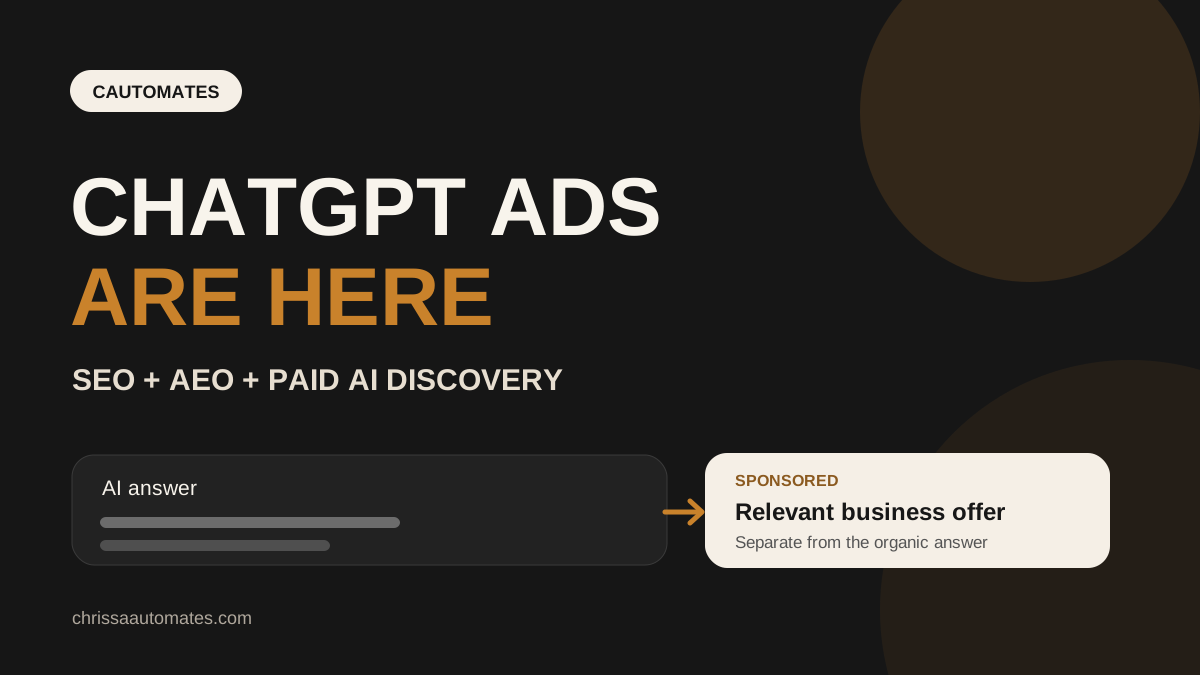
Short answer: ChatGPT Ads add a paid discovery layer to conversational AI. They do not replace SEO or Answer Engine Optimization (AEO). For businesses, the practical strategy is to combine organic search visibility, clear AI-readable information, paid discovery where it makes sense, and a website that can convert the customer after an AI system sends them there.
OpenAI says ads in ChatGPT are clearly labeled and visually separated from ChatGPT's organic answers. OpenAI also says advertisers do not receive users' conversations and that ads do not influence the answers ChatGPT gives. The key marketing distinction is simple: paid placement and organic AI visibility are different channels.
Availability note: ChatGPT ad access is still limited and evolving. OpenAI's public Help Center currently documents testing for logged-in adult users on Free and Go plans in the United States. Verify current advertiser and country availability directly with OpenAI before planning spend around the channel.
ChatGPT Ads are sponsored placements shown separately from ChatGPT's generated response. Paying for an ad is not the same as paying ChatGPT to recommend your business inside its answer.
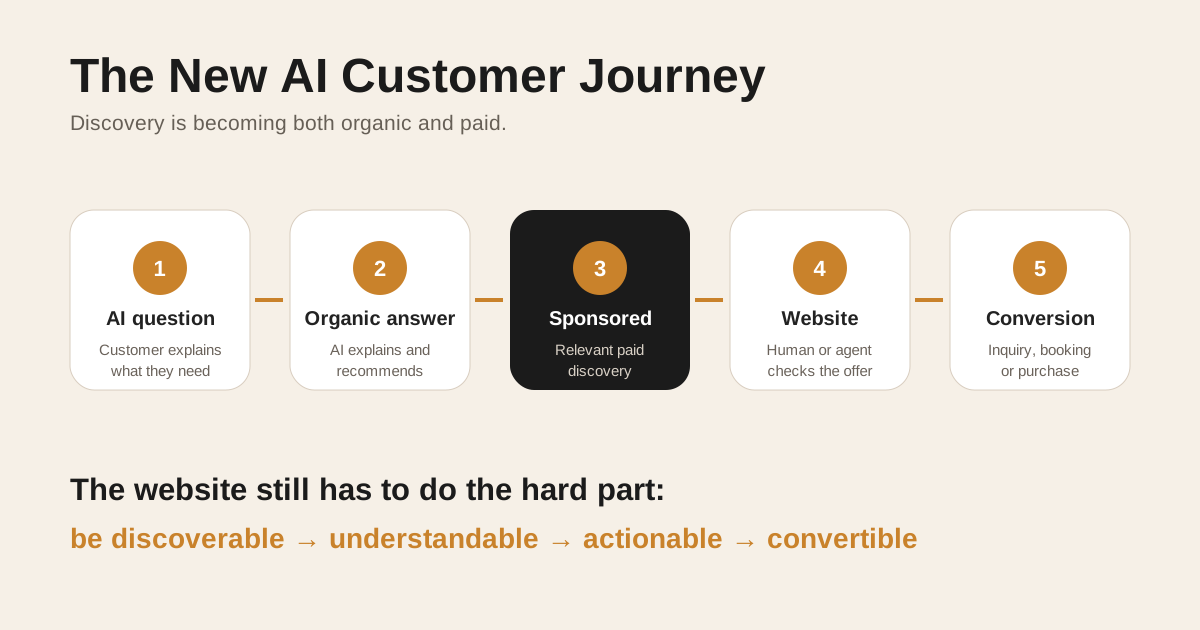
A commercial conversation can include an organic answer, a separate sponsored placement, and a link to a business experience. The website still has to explain the offer and convert the visitor.
This creates two different visibility opportunities:
According to OpenAI, no. Ads are separate from ChatGPT's answers and do not influence them.
A business can therefore advertise without being mentioned organically, appear organically without advertising, potentially do both, or do neither. AEO remains relevant even as paid AI advertising develops.
These three channels solve different problems.
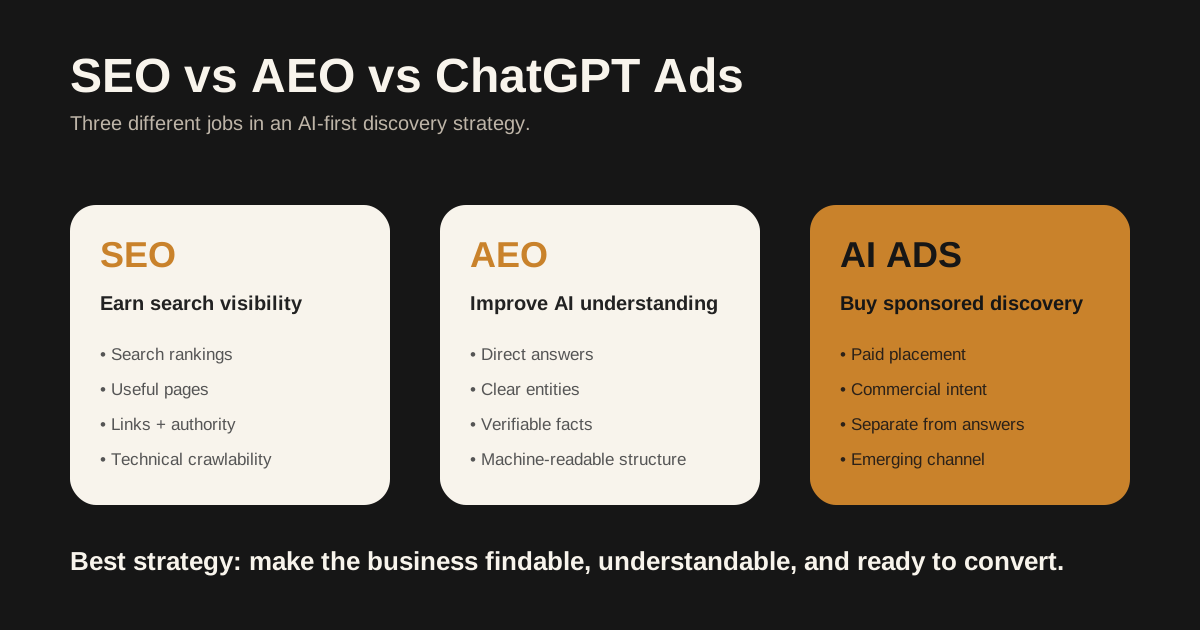
Search Engine Optimization helps a business become discoverable in traditional search. It usually involves useful content, technical crawlability, backlinks, internal linking, local SEO, structured data and pages built around real search intent.
SEO answers: Can a search engine find, understand and rank this page for a relevant search?
Answer Engine Optimization focuses on making information easier for AI-powered search and answer systems to retrieve, understand and verify.
Useful AEO practices include direct answers, clear entity information, descriptive headings, original first-party information, accurate structured data, authoritative references and pages that do not force an AI system to guess basic facts.
AEO answers: Can an AI system understand what this business offers and confidently use the information when answering a question?
ChatGPT Ads introduce a paid channel around conversational intent.
AI advertising answers: Can a relevant commercial offer be surfaced as a sponsored option during an AI conversation?
The simple model is:
SEO = earn search visibility
AEO = improve organic AI visibility and understanding
ChatGPT Ads = buy sponsored AI discovery where available
AI website readiness = make sure the next step actually works
Traditional search advertising often begins with a short query such as corporate photo booth Toronto.
A conversational AI user can express much more context: event size, goal, location, concerns, budget logic and stage of decision-making. This does not automatically make conversational advertising better than search ads. It means the context surrounding commercial intent is richer.
For marketers, that increases the value of explaining the exact problem you solve, the customer you are right for, important limitations, pricing or qualification logic, location, availability and the next action.
Imagine a sponsored placement successfully gets a high-intent visitor to a business website. The visitor arrives and cannot determine what the company sells, where the service is available, how pricing works, who qualifies, what is included or what to do next.
The ad worked. The website failed.
This becomes even more important as browser agents and AI assistants help people research and compare options. An AI agent may need to identify services, pricing, policies, locations, requirements, availability and calls to action without a human interpreting every screen.
That is why I use a simple AI-first website framework:
Discoverable: search engines and AI systems can find the relevant page.
Understandable: the page clearly states what the business offers, for whom, where and under which conditions.
Actionable: the next step is explicit and technically accessible.
Convertible: the customer can complete the inquiry, booking, purchase or other goal.
ChatGPT Ads can potentially help with discovery. They cannot solve the other stages for you.
You do not need to rebuild your marketing strategy around a platform that is still being tested. Strengthen the parts of your website that help across search, AI discovery and conversion.
Every important commercial page should quickly explain what the offer is, who it is for, where it is available, what affects price and what the next step is. Avoid forcing people or machines to infer basic commercial facts from slogans.
A broad /services page may help navigation, but focused pages can communicate stronger context when the offer and intent are genuinely distinct. Avoid producing thin pages simply to target keyword variations.
Structured data can help machines understand the type and purpose of a page. Useful schema types may include Organization, Person, Article, Service, Product, LocalBusiness and BreadcrumbList when they match visible content.
Schema is not a shortcut to rankings or AI citations. It should describe real information users can verify.
This Chrissa Automates article automatically publishes BlogPosting structured data with its headline, description, publication date, author, canonical URL and featured image.
Important questions deserve explicit answers. Use descriptive headings and concise summaries so readers can scan the page and answer engines have clean passages to retrieve.
Keep core business information consistent across your website, authoritative profiles, directories and first-party pages. AEO is not about stuffing a page with keywords. It is partly about reducing ambiguity.
Give an AI browser agent a realistic customer task. For example: Find the right service for a 300-person corporate event, determine the important requirements and tell me how to check availability.
Watch where it succeeds and fails. A failed test can reveal unclear navigation, inaccessible widgets, missing facts or ambiguous calls to action.
As platforms expose more referral and campaign data, distinguish traditional organic search, paid search, ChatGPT, other AI assistants and paid AI campaigns. Measure the final business outcome, not only clicks.
Not in the way many people assume. OpenAI says ads are separate from ChatGPT's organic answers. A sponsored placement can introduce a business commercially, but that does not mean the advertiser purchased a recommendation inside the generated answer.
A ChatGPT ad is paid placement. An organic ChatGPT answer is not supposed to be for sale.
There is no good reason to assume that. Google Search, Maps, Shopping, YouTube and Google's advertising infrastructure already serve many types of commercial intent. ChatGPT introduces a different environment centered on conversation and task context.
A more realistic future is channel diversification across Google organic search, Google Ads, AI-generated answers, sponsored AI placements, direct brand discovery and AI agents completing research or actions.
No. Paid discovery and organic discovery solve different problems. Strong first-party content, technical accessibility, entity clarity, useful data and earned authority can support discovery across channels even when an ad campaign is not running.
The practical strategy is not SEO versus AEO versus ChatGPT Ads.
It is SEO + AEO + paid AI discovery + agent-ready customer journeys.
Start with a five-step audit:
These steps improve your position even if you never buy a ChatGPT ad.
ChatGPT Ads are sponsored placements that OpenAI is testing in ChatGPT. OpenAI says ads are clearly labeled and kept separate from ChatGPT's organic answers.
OpenAI says no. Ads do not influence the answers ChatGPT gives and are displayed separately.
OpenAI says advertisers do not receive users' conversations. Ads are separate from private chats.
A sponsored placement is not the same as an organic recommendation. OpenAI says advertisements are separate from ChatGPT's answers.
No. Availability is limited and evolving. OpenAI's Help Center currently describes testing for logged-in adult Free and Go users in the United States. Check OpenAI's current documentation for changes before making campaign plans.
No. AEO focuses on making content clearer and more useful for organic AI retrieval and answers. ChatGPT Ads are paid sponsored placements.
No. SEO, AEO and paid AI discovery serve different roles. Businesses still need strong web pages, clear entity information, crawlability, authority and conversion paths.
ChatGPT Ads matter because they make a larger change easier to see. Customers increasingly use AI systems to research, compare, shortlist, navigate and make decisions. Browser agents are also beginning to interact with websites on a person's behalf.
Businesses are therefore preparing for an ecosystem containing search engines + answer engines + AI agents + advertising systems + humans.
The strongest foundation remains straightforward:
Be discoverable. Be understandable. Be actionable. Be convertible.
Paid AI discovery can bring attention. Your website still has to earn the next step.
This article is educational and reflects publicly documented information available on August 12, 2026. Advertising availability, targeting, formats and eligibility can change as OpenAI develops the product.

Chrissa Ibiernas
Chrissa Ibiernas creates practical content about AI search, agentic AI, automation and website readiness for the AI-first internet.
Building an AI or SaaS product people need to see in action?
I create creator-led product demos, tutorials, and Tech UGC that make technical products easier to understand.