Research & Experiments
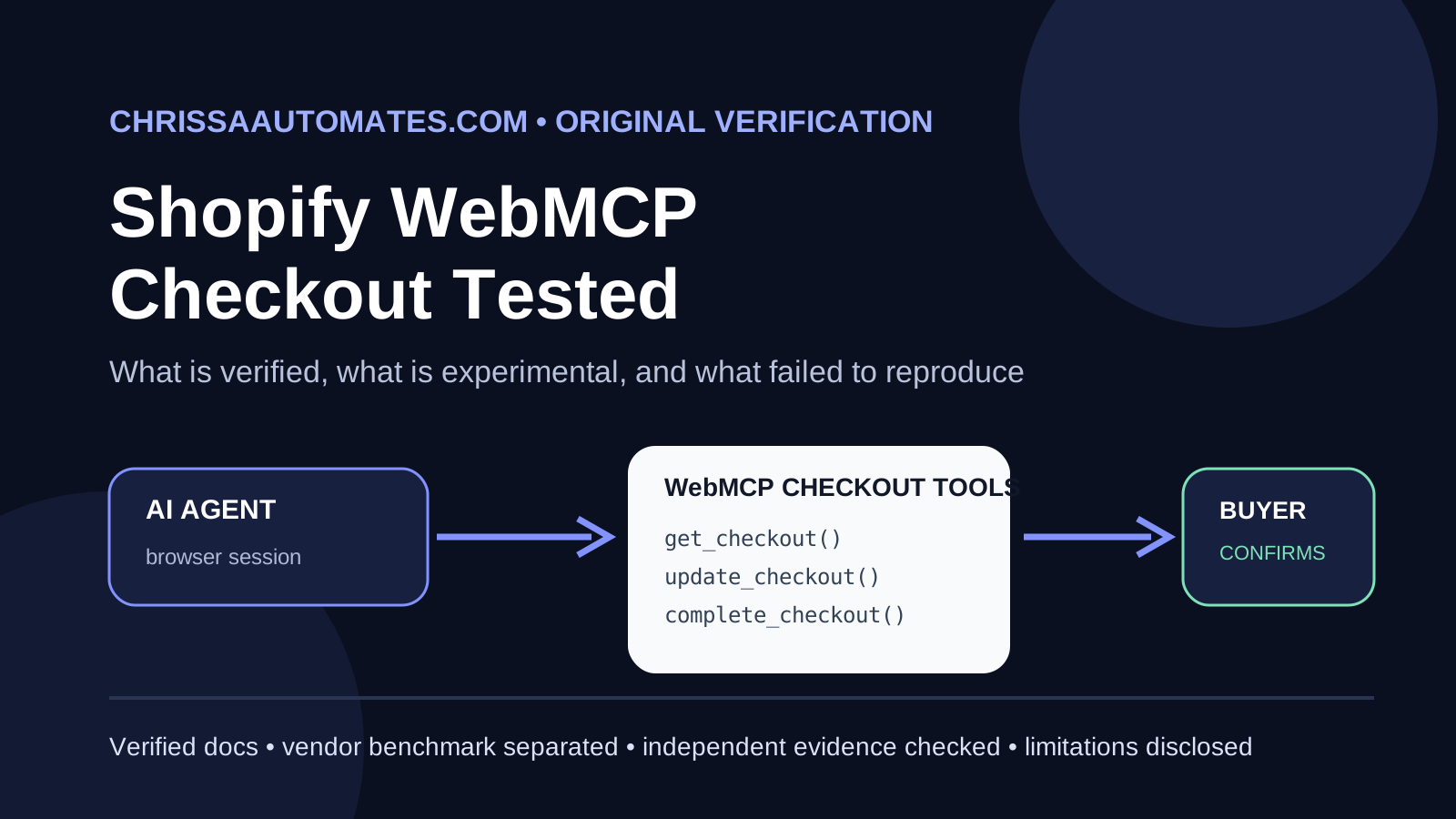
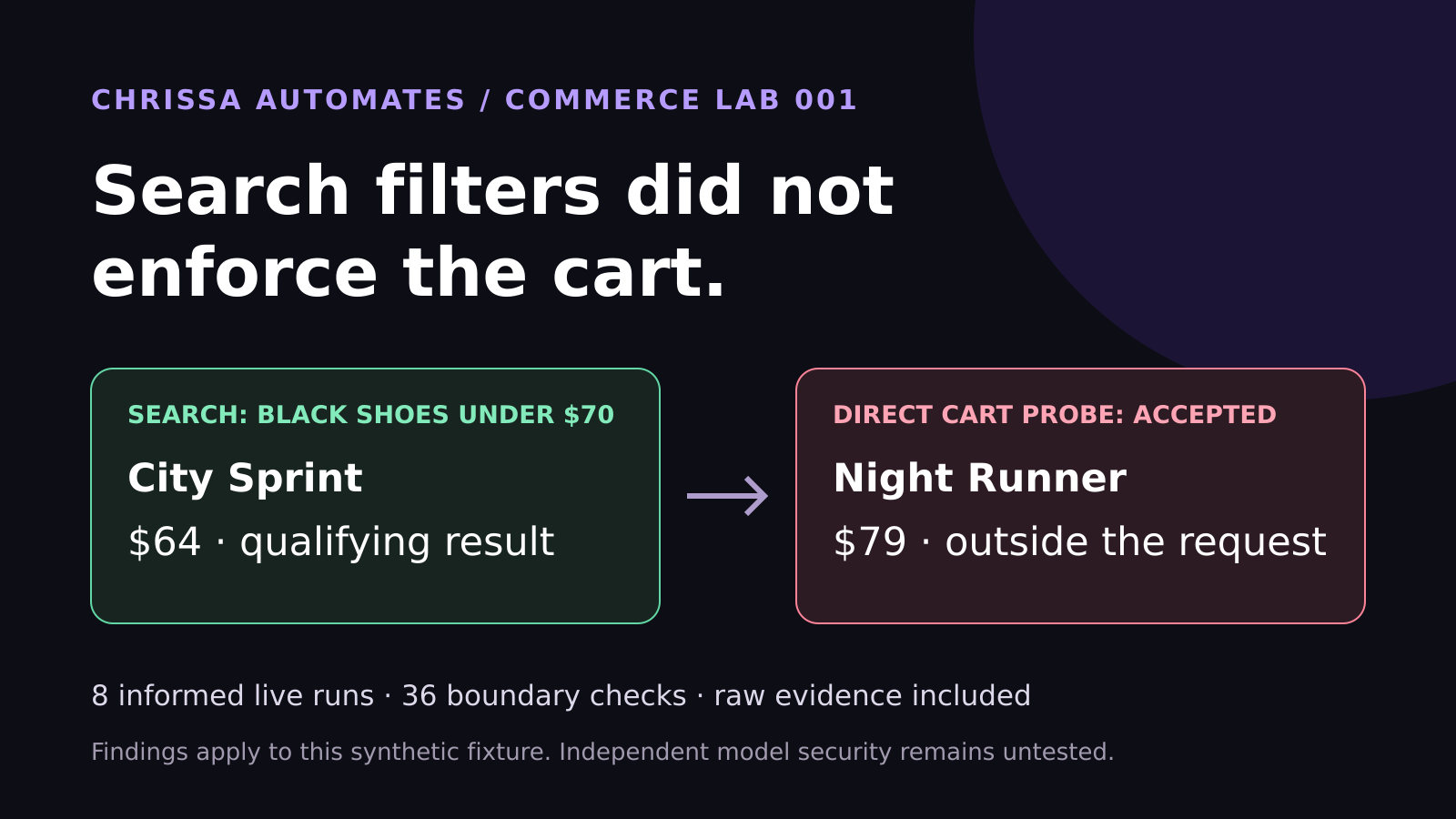
WebMCP Shopping Test: Search Filters Did Not Enforce the Cart
Eight live WebMCP runs selected the correct shoes. Another 36 checks found cart enforcement gaps. See the measured results and lessons for ecommerce brands.
Artificial Intelligence, Customer Experience, Automation
AI is everywhere in business conversations, yet terms like “AI agents” and “chatbots” are often used as if they mean the same thing. In reality, they serve very different purposes. Understanding those differences helps leaders choose the right solution for customer service, operations, and growth.
While both interact through natural language, chatbots are typically designed for structured conversations, such as answering FAQs or guiding users through simple steps. They often follow predefined scripts and decision trees, even when powered by modern language models. Their main purpose is to respond to questions quickly and consistently within a limited scope.
AI agents, on the other hand, are goal-driven systems that can reason, plan, and take actions across multiple tools or systems. Instead of just replying in chat, they may update a CRM, trigger a workflow, book appointments, generate reports, or coordinate with other agents. Conversation is just one interface; their real value lies in doing work on behalf of the business, often autonomously and continuously.
Scope: Chatbots focus on conversations; AI agents focus on achieving outcomes and tasks.
Complexity: Chatbots handle straightforward queries; AI agents manage multi-step, cross-system processes.
Autonomy: Chatbots react to user prompts; AI agents can proactively act based on rules, triggers, or goals.
📌 Key Takeaway: Every AI agent can “chat,” but not every chatbot can operate as an agent that takes real-world actions.
Modern business chatbots specialize in handling high-volume, repetitive interactions. Their core strengths include:
Instant answers to common questions such as shipping times, pricing, refund policies, or account basics, reducing the load on human support teams.
Guided flows like password resets, appointment scheduling, or product recommendations, usually following step-by-step scripts.
24/7 availability to capture leads, answer basic questions, and route issues even outside business hours.
Routing and escalation to direct complex or sensitive cases to the right human agent with context already collected.
In essence, chatbots excel at front-line communication. They keep queues short, provide consistent responses, and free human teams to focus on nuanced, high-value interactions that require empathy and judgment.
AI agents extend far beyond conversation. They are built to work across systems, follow goals, and adapt as they go. Typical capabilities include:
Tool and system integration: connecting to CRMs, ticketing tools, marketing platforms, or data warehouses to read and write information.
Multi-step workflows: performing chained tasks such as qualifying a lead, updating records, sending follow-up emails, and scheduling meetings without human intervention.
Decision-making and prioritization: choosing which tasks to tackle first based on rules, data, or business objectives, not just user prompts.
Proactive behavior: monitoring events—like churn signals, stock levels, or SLA breaches—and acting automatically when thresholds are reached.
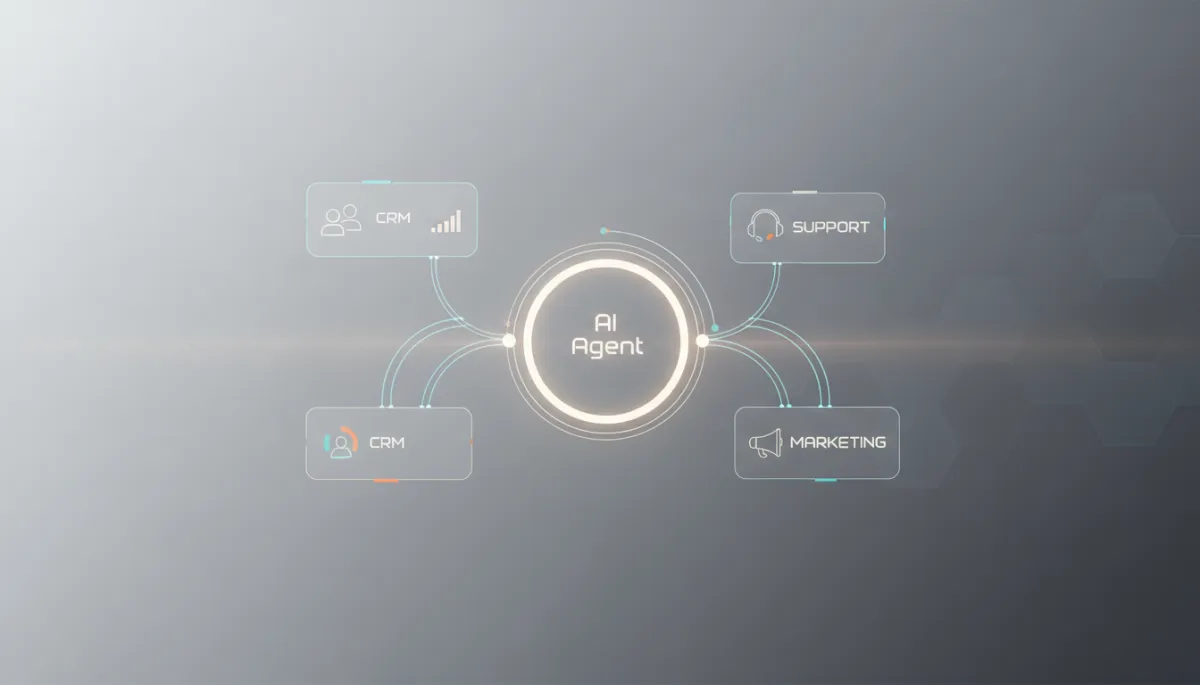
AI agents orchestrate complex workflows across tools, turning insights into automated actions.
Rather than simply answering questions, AI agents act like digital colleagues who can own recurring tasks, follow playbooks, and collaborate with human teams to deliver outcomes faster and more reliably.
Chatbots shine in scenarios where the business needs high-volume, predictable communication. Common use cases include:
Customer support portals handling FAQs, order tracking, returns questions, and basic troubleshooting on websites or in mobile apps.
Sales and marketing chat widgets that greet visitors, qualify leads with a few simple questions, and route promising prospects to sales reps.
Internal help desks answering routine HR, IT, or policy questions for employees, reducing ticket volume.
💡 Pro Tip: Use chatbots to standardize and scale simple interactions before investing in more complex automation.
AI agents are most effective when a business wants to automate end-to-end processes rather than just conversations. High-impact applications include:
Revenue operations: agents that qualify leads, update opportunity stages, generate personalized outreach, and keep pipelines clean across CRM and marketing tools.
Customer success and retention: agents that monitor usage data, flag at-risk accounts, draft outreach plans, and schedule check-ins for human managers.
Operations and back office: agents that reconcile data between systems, prepare recurring reports, trigger approvals, and keep records in sync.
In these scenarios, AI agents become part of the operational backbone, continuously working in the background to maintain momentum and reduce manual effort across teams.
The decision is not about replacing chatbots with AI agents, but about using each where it fits best. Chatbots are ideal for clear, repetitive questions at the front line. AI agents are better suited for orchestrating complex, cross-team workflows that drive revenue, efficiency, and customer satisfaction.
Start by mapping your most frequent interactions and your most time-consuming processes. Deploy chatbots to handle predictable conversations, and introduce AI agents where human teams are bogged down by manual, multi-step work. Together, they can create a smarter, more responsive business that serves customers better while freeing people to focus on strategic, creative, and relationship-driven tasks.
A chatbot is mainly designed to respond to questions or guide users through a conversation. An AI agent is designed to complete a goal, use tools, make decisions, and take action across business systems. A chatbot talks with users, while an AI agent can help carry out actual work.
Some advanced chatbots can include agent-like features, but most chatbots are not full AI agents. A chatbot becomes more agentic when it can understand a goal, access tools, complete multi-step tasks, and act based on business rules or context.
AI agents are not always better. They are simply built for more complex work. Chatbots are useful for simple, repetitive conversations such as FAQs, order tracking, and basic support. AI agents are better for workflows that require planning, tool use, follow-up, data updates, and task completion.
Chatbots are commonly used for customer support, lead capture, appointment booking, product recommendations, internal help desk questions, and basic troubleshooting. They are most effective when the questions are predictable and the answers can be standardized.
AI agents can support sales follow-up, CRM updates, lead qualification, customer success monitoring, report generation, ticket triage, workflow automation, and data synchronization. They are especially useful when a task requires several steps across different tools.
AI agents are best used as support systems, not full replacements for human teams. They can handle repetitive tasks, prepare information, and suggest next actions, but humans are still needed for judgment, strategy, relationship-building, empathy, and final approval.
A good starting point is one low-risk workflow with clear rules. For example, an AI agent can summarize new leads, draft follow-up emails, or prepare CRM notes for human review. Businesses should start with human approval before allowing agents to take more direct action.
AI agents can connect with tools such as CRMs, email platforms, calendars, spreadsheets, ticketing systems, marketing automation platforms, databases, and internal knowledge bases. The value of an AI agent increases when it can access the right business context and use the right tools.
A small business should start with the problem it needs to solve. If the goal is to answer common customer questions, a chatbot may be enough. If the goal is to reduce manual work, follow up with leads, update records, or manage a process across tools, an AI agent may be more useful.
AI agents are expected to become more common in sales, marketing, customer success, operations, and internal admin work. As businesses connect more tools and data sources, agents will become more useful for coordinating tasks, preparing decisions, and helping teams work faster with less manual effort.

Chrissa
Chrissa Ibiernas is a Marketing Automation, Lead Generation & AI Workflow Specialist with 8+ years of experience building lead funnels, CRM pipelines, email nurturing systems, and AI-assisted follow-up workflows. She works with GoHighLevel, HubSpot, n8n, Zapier, OpenAI, and Claude to help businesses build practical marketing systems that connect lead generation to conversion. Contact: hello@chrissaautomates.com
Building an AI or SaaS product people need to see in action?
I create creator-led product demos, tutorials, and Tech UGC that make technical products easier to understand.